Machu Picchu
Machu Picchu is Peru’s most famous archaeological site and one of the New Seven Wonders of the World. Built deep in the heart of the Andes, this Inca citadel combines incredibly precise architecture with a natural setting that few places on Earth can match: steep mountains, cloud forest, and the edge of the upper Amazon basin.
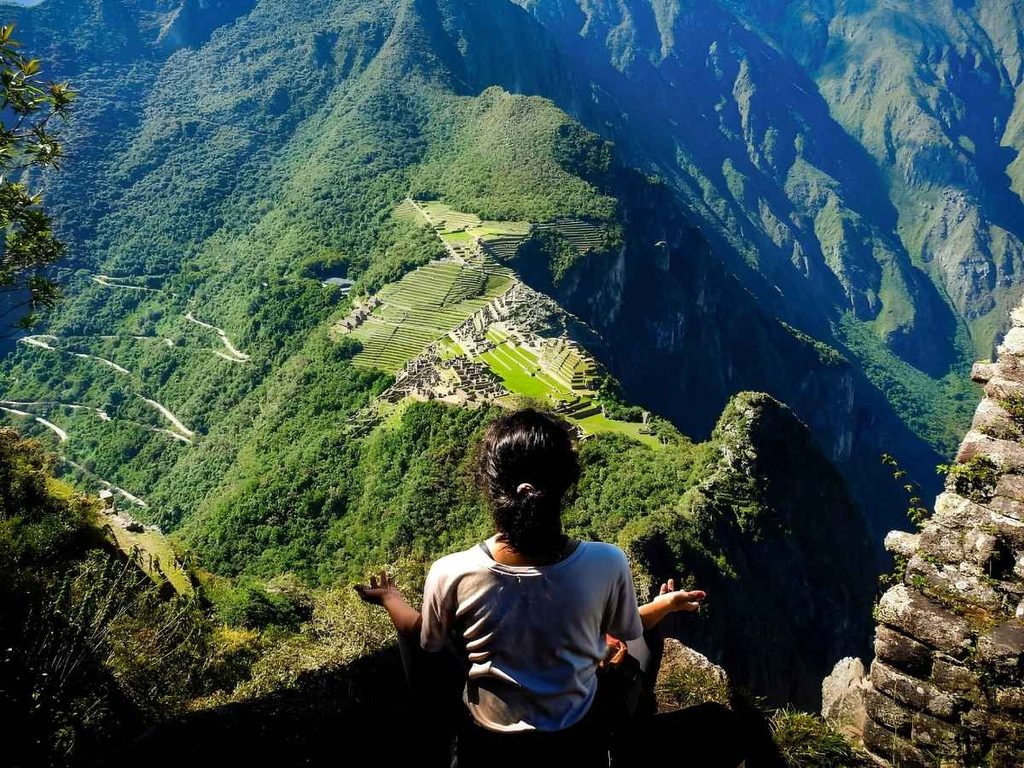
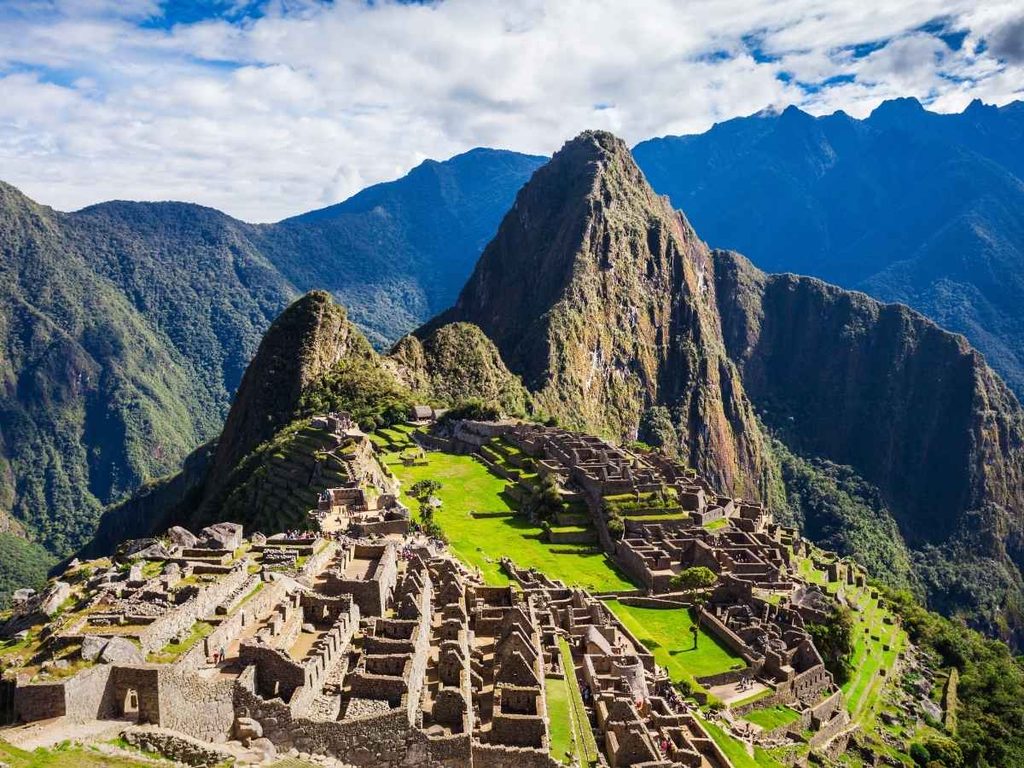
Machu Picchu is located in the Cusco region, in the Urubamba river valley, at 2,430 metres above sea level (about 7,970 feet), sitting on a mountain ridge between the peaks of Machu Picchu and Huayna Picchu. The site is about 80 km (50 miles) north-west of the city of Cusco, on the eastern slopes of the Andes, right at the point where the mountains start dropping down into the Amazon rainforest.
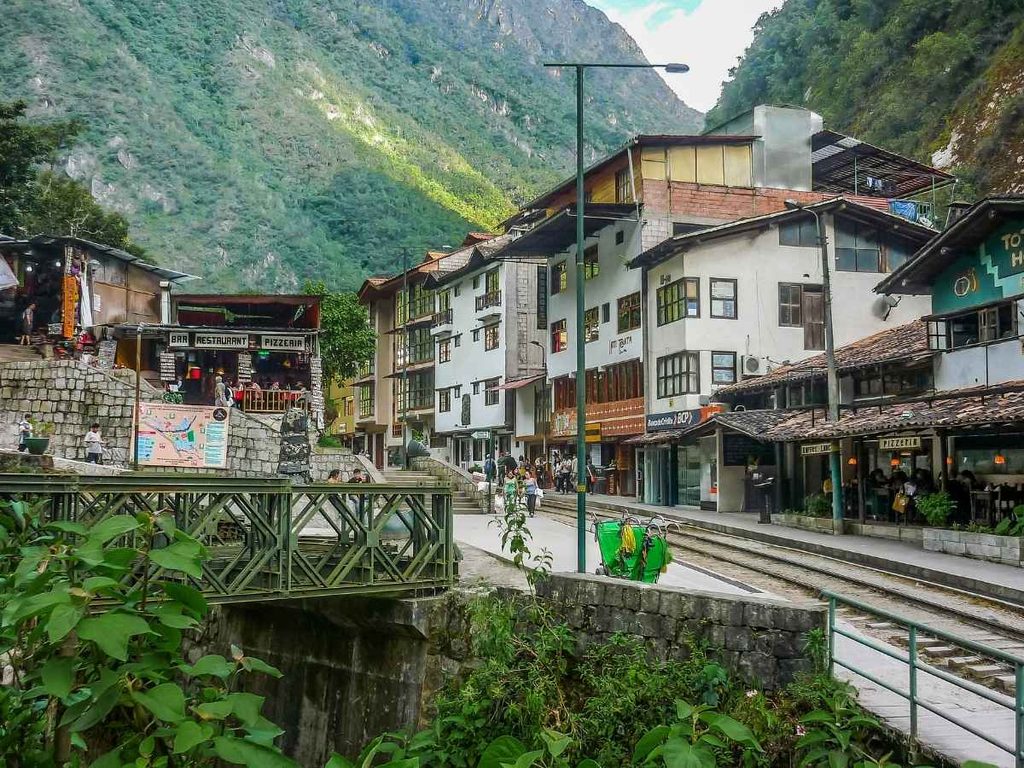
The nearest access point is Machu Picchu Pueblo (formerly known as Aguas Calientes), a small town at the foot of the mountain. There’s no road connecting it directly to Cusco, so the only ways to get there are by train or on foot. From the town, a bus service takes visitors up to the citadel’s entrance in about 20 to 30 minutes, or you can hike up in around 2 hours.
Climate and the Best Time to Visit
Machu Picchu has a humid mountain climate, with daytime temperatures generally ranging from 12°C to 24°C (54°F to 75°F). The dry season, from May to September, brings clearer skies and is the most popular time to visit, though it also means larger crowds. The rainy season, from November to March, makes the landscape greener but brings a higher chance of heavy rain, especially in January and February — the classic Inca Trail is actually closed for maintenance during February.
History: From Royal Estate to World Heritage Site
Machu Picchu, whose name means “old mountain” in Quechua, was built in the 15th century on the orders of the Inca ruler Pachacútec, during a period of major expansion for the Inca Empire. There’s no absolute agreement on exactly what it was built for, but the most widely accepted theory describes it as a royal estate and religious and administrative centre, built in a strategic spot between mountains and valleys.
After the Spanish conquest in the 16th century, Machu Picchu was abandoned. Unlike many other Inca cities, it was never found or destroyed by the conquistadors, which is part of why it survived in such good condition for centuries, hidden away by the surrounding vegetation. While some local residents, including a farmer named Agustín Lizárraga, had reportedly known about the site since the early 1900s, it was the American explorer Hiram Bingham, a professor at Yale University, who brought it to the world’s attention on 24 July 1911, guided by a local farmer named Melchor Arteaga. Bingham’s later expeditions, together with a special feature published in National Geographic magazine in 1913, sparked international interest that turned Machu Picchu into a global symbol of Inca civilisation.
In 1983, UNESCO named Machu Picchu a Mixed World Heritage Site, recognising it for both its outstanding architecture and the rich natural environment surrounding it — a rare combination of cultural and natural value. Today, the site is part of the Historic Sanctuary of Machu Picchu, a protected area covering 32,592 hectares (about 80,500 acres) managed by the Peruvian state, and in 2007 it was voted one of the New Seven Wonders of the World in a worldwide public poll.
The architecture of the Citadel and places to visit in Machu Picchu
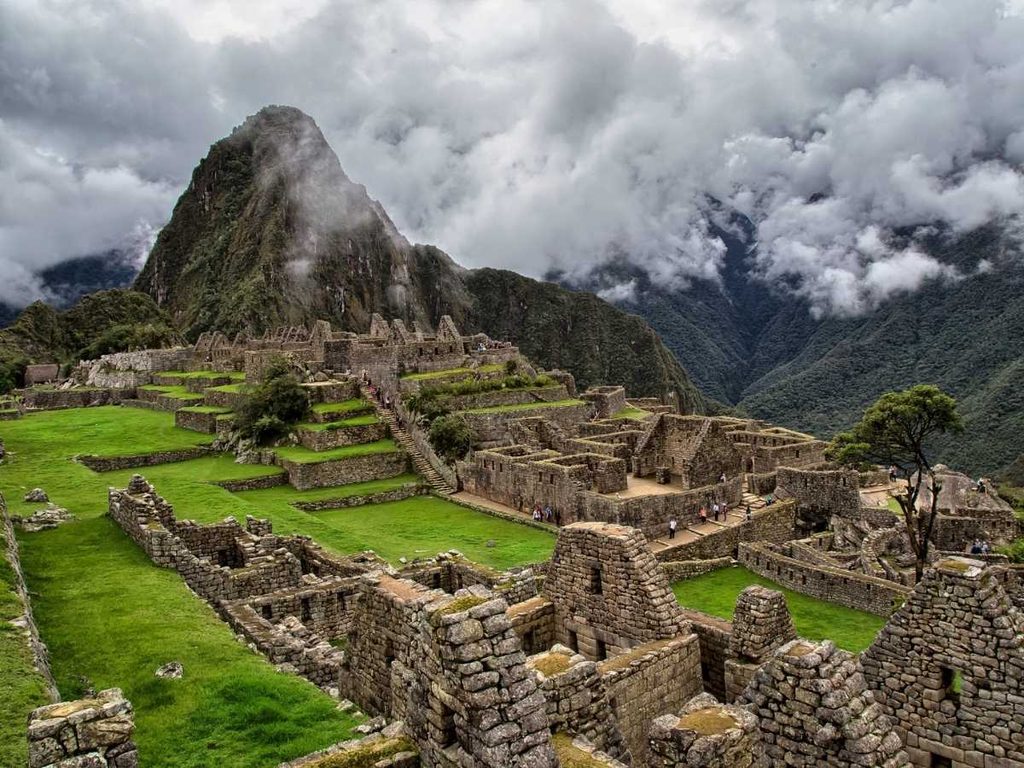
The complex is made up of roughly 200 stone structures, split into two main areas separated by a central plaza: an agricultural area, made up of stepped terraces that were carved into the mountainside for farming, and an urban area, with temples, plazas, homes and administrative buildings. Some of its best-known structures include the Temple of the Sun, the Intihuatana (a carved stone thought to have had an astronomical purpose), and the Temple of the Three Windows.
One of the things that impresses visitors most is how precisely the Inca cut and fitted the stone blocks together — without using any kind of mortar — along with the clever system of channels and terraces that managed rainwater and prevented erosion, something that’s still helping preserve the site today.
The Machu Picchu citadel. The main attraction and an absolute must-see, with several official routes through its temples, plazas and agricultural terraces.
Huayna Picchu. The mountain seen rising behind the citadel in the most iconic photos of Machu Picchu. Only 200 visitors are allowed to climb it each day, and the hike rewards you with a bird’s-eye view of the whole site.
Machu Picchu Pueblo. The small town at the base of the mountain, and the starting point for reaching the citadel. It has craft markets, restaurants, and natural hot springs.
Manuel Chávez Ballón Site Museum. Located near the town, this museum displays archaeological pieces and gives useful background on the citadel and the expeditions that brought it to light.
The Inca Trail. The trekking route that links several smaller archaeological sites on the way to Machu Picchu, ending at the Sun Gate, which offers one of the best views of the whole complex.
How to Get to Machu Picchu
Getting to Machu Picchu usually happens in stages. From Cusco, most visitors travel by road to Ollantaytambo, in the Sacred Valley, and then take a train to Machu Picchu Pueblo, a journey of roughly an hour and a half. Some trains also depart directly from stations within Cusco itself. Once in the town, the final stretch up to the citadel is completed by bus or on foot.
There’s also a much more physically demanding option: hiking the Inca Trail, a network of stone paths and staircases originally built by the Inca themselves. Depending on the route, this can take between 2 and 4 days, ending at the Sun Gate (Intipunku), which offers one of the very first panoramic views of the citadel.
A Site Under Constant Protection
Because of the huge number of visitors it receives every year, Machu Picchu faces real conservation challenges, including soil erosion, pressure on nearby ecosystems, and the ongoing balancing act between tourism and preservation. That’s why entry to the citadel is regulated through set time slots and routes, and the Management Unit of the Historic Sanctuary of Machu Picchu — made up of several Peruvian government bodies — works continuously on its long-term care and planning.
More than a century after it was brought to international attention, Machu Picchu remains a major subject of archaeological study and a source of wonder for millions of visitors. Its precise engineering, strategic location, and outstanding natural surroundings make it one of the most important surviving testimonies to Inca civilisation, and one of the most admired architectural wonders on Earth.