
Puno
Puno sits on the shore of Lake Titicaca, the highest navigable lake in the world, and is one of southern Peru’s most distinctive destinations. Andean tradition, pre-Inca archaeology, colonial churches, and spectacular high-altitude landscapes come together here, along with unique places such as the Uros Floating Islands, Taquile Island, and Amantani Island.
Whether you have a single day or several, Puno works both as a destination in itself and as a natural stop on a longer trip through southern Peru, combining cultural experiences, nature, history, and traditional communities.
About Puno, the Folklore Capital of the Americas
Puno is widely recognized for its rich cultural heritage and vibrant Andean traditions. Its location on the shores of Lake Titicaca and its strong Quechua and Aymara heritage make the city an important cultural destination in Peru.
Where is Puno and How Do You Get There?
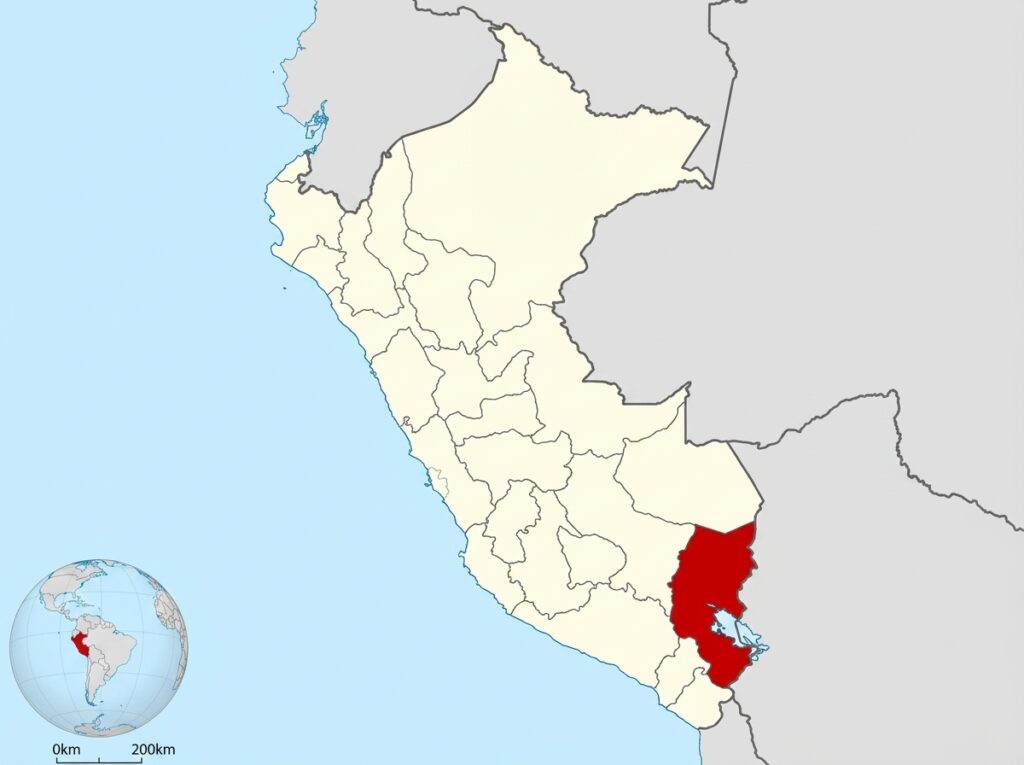
Puno lies in southeastern Peru, on the western shore of Lake Titicaca and close to the Bolivian border, at approximately 3,827 meters (12,556 feet) above sea level — one of the highest cities in the country, on the cold high plains known as the altiplano.
The nearest airport is in Juliaca, the largest city in the region, about an hour to the north. Most travelers arrive overland from Cusco by bus, tourist train, or private transport, a journey of several hours across spectacular Andean scenery, often after visiting Machu Picchu. Puno also connects easily with Arequipa, Lima, and Bolivia.
Why is Puno known as the Folklore Capital of the Americas?
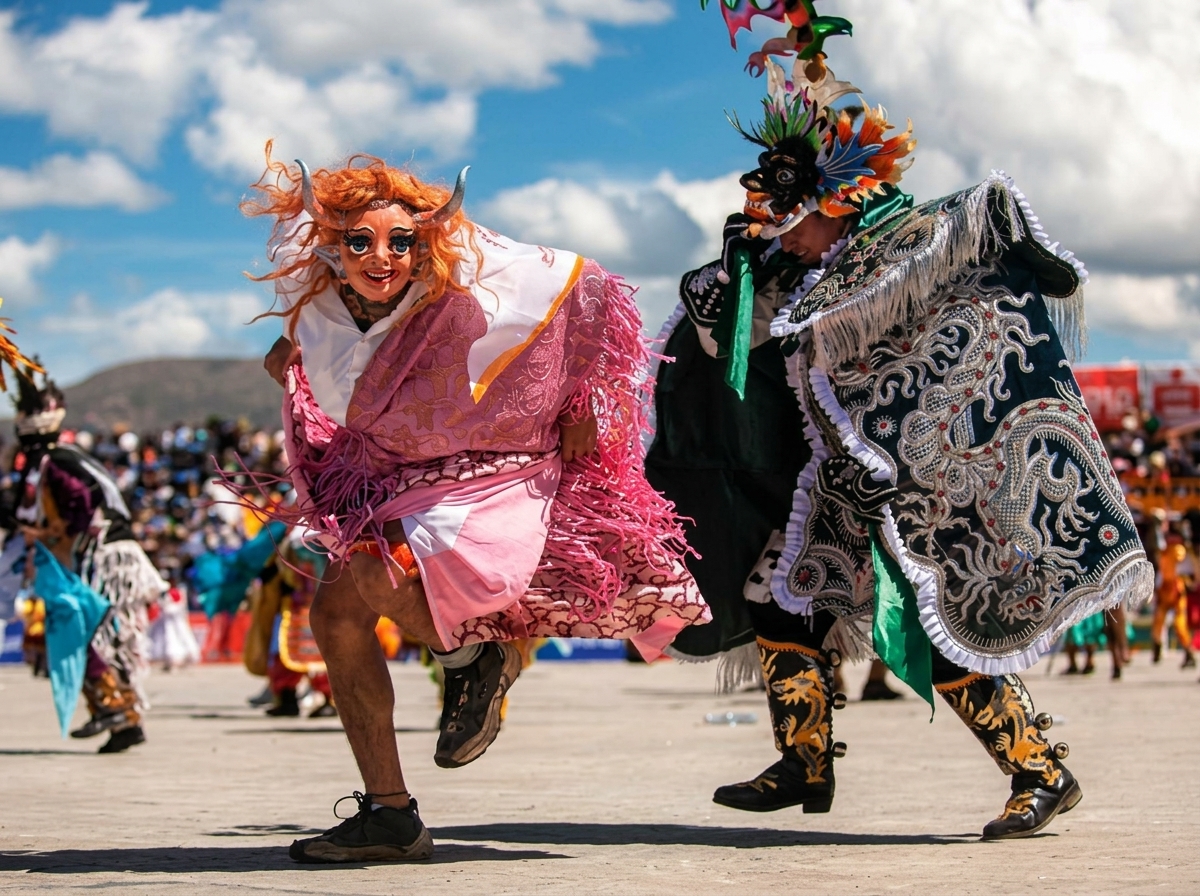
Puno earned the title of Folklore Capital of the Americas thanks to its more than 300 traditional dances, along with the music, costumes, and celebrations that remain part of everyday life across the region. The Caporales and the Diablada are among the best known.
The great showcase is the Festival of the Virgen de la Candelaria, the city’s patron saint, held every February. It brings together thousands of dancers, musicians, and visitors, and is one of Peru’s most important cultural celebrations, rooted in the heritage of Puno’s Quechua and Aymara communities.
History and City Life in Puno
The altiplano around Puno was home to the Tiahuanaco culture thousands of years ago, and later to the Colla and Lupaca peoples, whose funerary towers still stand on the hills nearby. Under Spanish rule the city grew wealthy from the Laykakota mines, and centuries later Puno and Arequipa became Peru’s main centers for alpaca fiber — the region is still known as the land of the camelids.
The city itself is compact, with adobe buildings and metal roofs. Its Main Square was built in 1747 by Simeón de Asta, and Jirón Lima, the main pedestrian street, concentrates the restaurants, bars, and live music. Torre Avenue has a railway line and a lively fruit market, and bicycles — including bicycle taxis — are a popular way to get around. Boats to the islands leave from the port on Titicaca Avenue.
Weather and Best Time to Visit Puno
Puno has a cool high-altitude climate with significant differences between daytime and nighttime temperatures. The dry season, from May to October, brings sunny days and clear skies and is generally the best period for boat trips, sightseeing, and outdoor activities around Lake Titicaca.
The rainy season runs from November to April, with cloudier days and rainfall, although the region welcomes visitors year-round. Whenever you travel, temperatures drop considerably after sunset, so bring warm layers as well as protection from the strong high-altitude sun. Travelers interested in folklore often plan their trip around February and the Candelaria festival.
Interesting Places to Visit in Puno, Peru
Puno offers a variety of natural, cultural, and archaeological attractions. Most visitors combine the city’s historic center with excursions to Lake Titicaca and nearby archaeological sites.
Lake Titicaca and Its Islands
Lake Titicaca is the region’s main attraction and the heart of its cultural identity. Its deep blue waters and traditional lakeside communities create a unique travel experience, and boat excursions leave daily from the port of Puno, usually combining two or three islands with a local guide.
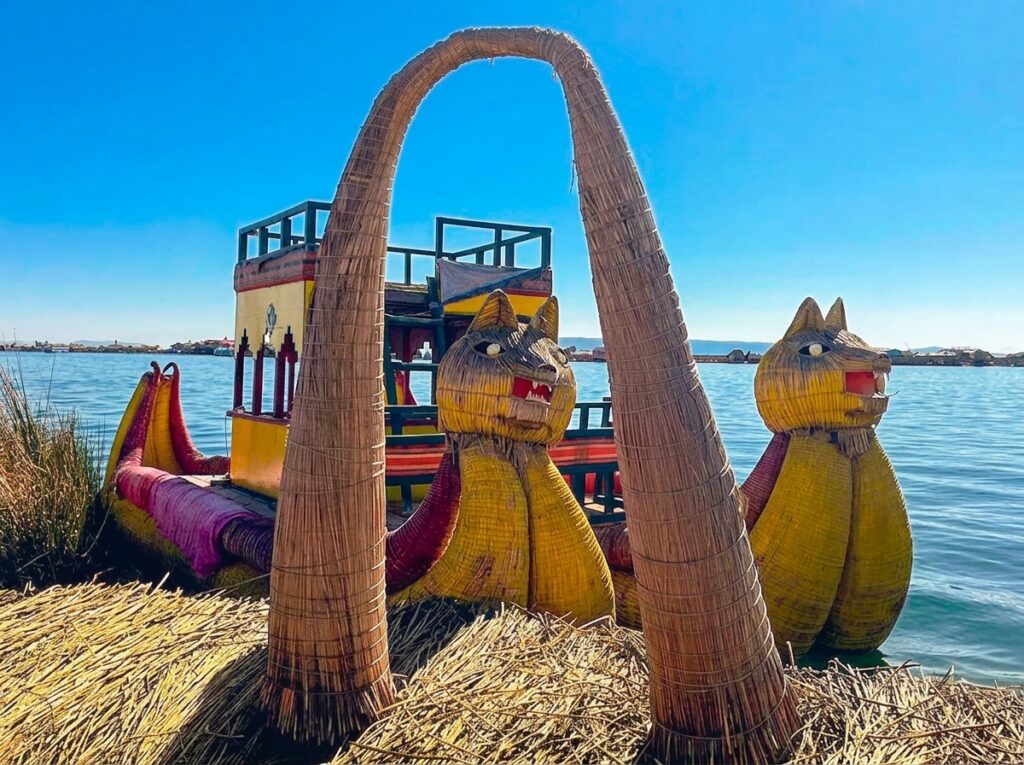
- Uros Floating Islands. Artificial islands built entirely from totora reeds, where the Uros people also build their traditional boats. Included in almost every half-day and full-day tour.
- Taquile Island. About 35 km from Puno, known for its terraced landscapes, panoramic views, and highly regarded textile art; it served as a political prison during the 20th century. Usually visited on a full-day excursion.
- Amantani Island. Some 36 km from the port of Puno, covered in low bushes and crossed by paths leading up to natural viewpoints, close to the pre-Hispanic temples of Pacha Tata and Pacha Mama, as well as Incachincana, Inca Tihana, and the cemetery of mummies. Overnight tours include a stay with a local family, traditional meals, and cultural activities.
- Suasi Island and the Titicaca National Reserve (36,180 hectares), which protects extensive stretches of totora reeds along with the lake’s plant and animal species, complete the picture for travelers with more time.
Archaeological Sites Near Puno: Sillustani and Cutimbo
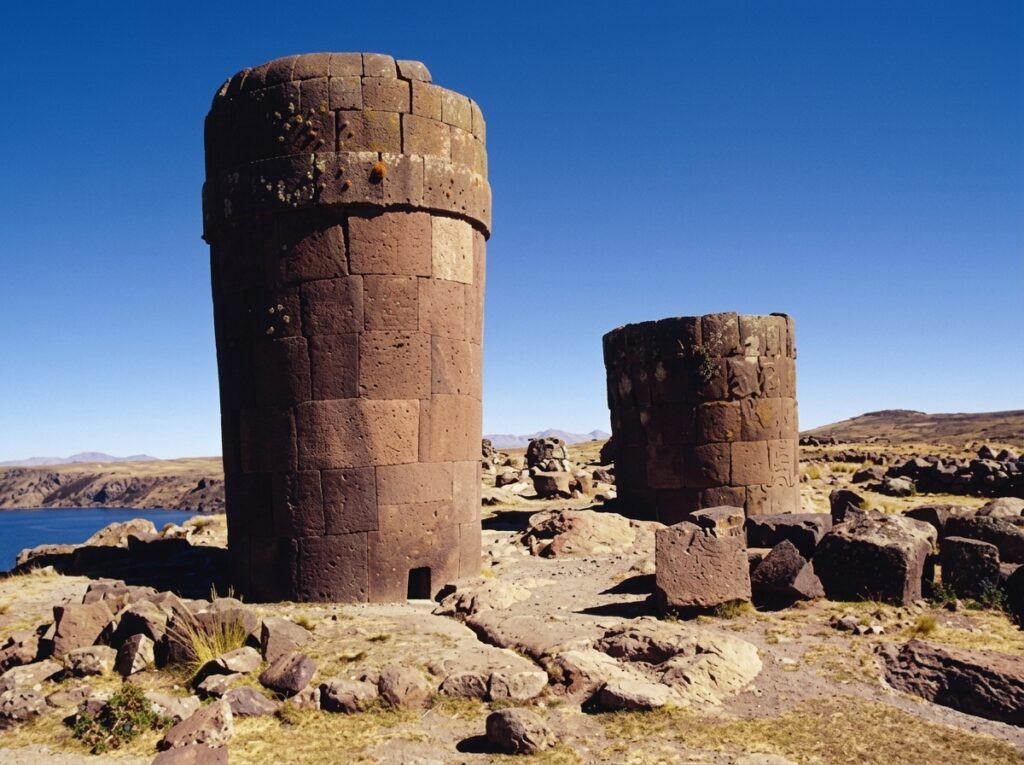
Sillustani, 34 km from the city and about 30 minutes away, overlooks the beautiful Umayo Lagoon and is famous for its chullpas — tall, round stone funerary towers built to hold the remains of the main authorities of the Collao people. A small site museum displays archaeological pieces from the Colla, Tiahuanaco, and Inca cultures. It is normally visited as a half-day excursion.
Cutimbo, at kilometer 22 of the Puno–Moquegua highway, is a quieter pre-Hispanic cemetery of the Lupaca and Colla peoples, with evidence that the Incas also lived there during the time of the Empire.
Puno’s Historic Center and the Lakeside Towns
Puno’s historic center can be explored in a couple of hours: colonial architecture, traditional streets, churches, the Main Square, handicraft shops, and cafés, plus the Deustua Arch, a monument commemorating the Peruvian independence movement a few blocks from the square.
South along the lake, Chucuito and Pomata form an interesting circuit of magnificent renaissance-baroque churches. To the north, the towns of Lampa and Azángaro are well worth adding to a longer itinerary for their remarkable and still little-known temples.
Recomendations for traveling to Puno
- Best time to visit: The dry season, from May to October, is ideal for exploring Puno, as there is less rainfall and temperatures are more pleasant. However, if you wish to experience local festivities, the Festival of the Virgin of Candelaria in February is a highlight.
- Altitude acclimatization: Puno is located at 3,810 meters above sea level. To prevent altitude sickness, it is advisable to:
- Avoid strenuous physical activity during the first 24 hours.
- Eat light, easily digestible meals.
- Stay well-hydrated by drinking more than three liters of water a day.
- Limit alcohol and caffeine consumption. Many hotels offer oxygen and coca tea, a traditional infusion that helps alleviate altitude sickness symptoms.
- Climate and clothing: The climate in Puno is cold due to the altitude, with temperatures ranging from 3°C to 15°C. It is recommended to bring:
- Warm clothing, such as down jackets and sweaters.
- Waterproof clothing and a rain poncho, as the weather can be unpredictable.
- A wool hat, scarf, and gloves to protect against the cold.
- Water-resistant trekking shoes for walking on uneven terrain.
- Safety: Puno is generally safe for tourists, but it is wise to:
- Avoid displaying valuables in public.
- Exercise caution in crowded places and markets.
- Use authorized transportation services.
- Avoid walking in areas far from the city center.
- Documentation: Carry your national ID card or a current passport. If you are a foreign national, it is essential to carry a valid passport with at least six months of remaining validity. It is advisable to keep digital and physical copies of important documents and to purchase travel insurance that covers medical emergencies and losses.
- Money and payments: The local currency is the Peruvian sol (PEN). Although many establishments in Puno accept credit and debit cards, it is advisable to carry cash for small expenses, especially in markets and rural areas.
- Health: In addition to acclimatization, consider the following:
- Drink bottled water and avoid ice in drinks.
- Use sunscreen and sunglasses, as UV radiation is intense at high altitudes.
- Keep a basic first-aid kit with personal medications on hand.
Location: 1320 km. aprox. southeast of Lima – capital of Peru
Altitude: 3827 MAMSL
Highlights of Puno: Juliaca, Sillustani, Azangaro, Desaguadero, Uros, Taquile