
Ica
Ica is one of the most distinctive destinations on Peru’s southern coast: a city surrounded by desert where the sun shines almost every day of the year, with more than 3,400 hours of sunshine annually. Here you will find the oasis of Huacachina, the tallest sand dunes in South America, the wineries where pisco was born, and the legacy of ancient cultures such as Paracas and Nazca.
Located about four hours south of Lima along the Pan-American Highway, Ica combines desert adventure, a centuries-old winemaking tradition, archaeological heritage and coastal wildlife. It can be visited in a single day, but it rewards travelers who give it two or three.
Ica, the City of Eternal Sun
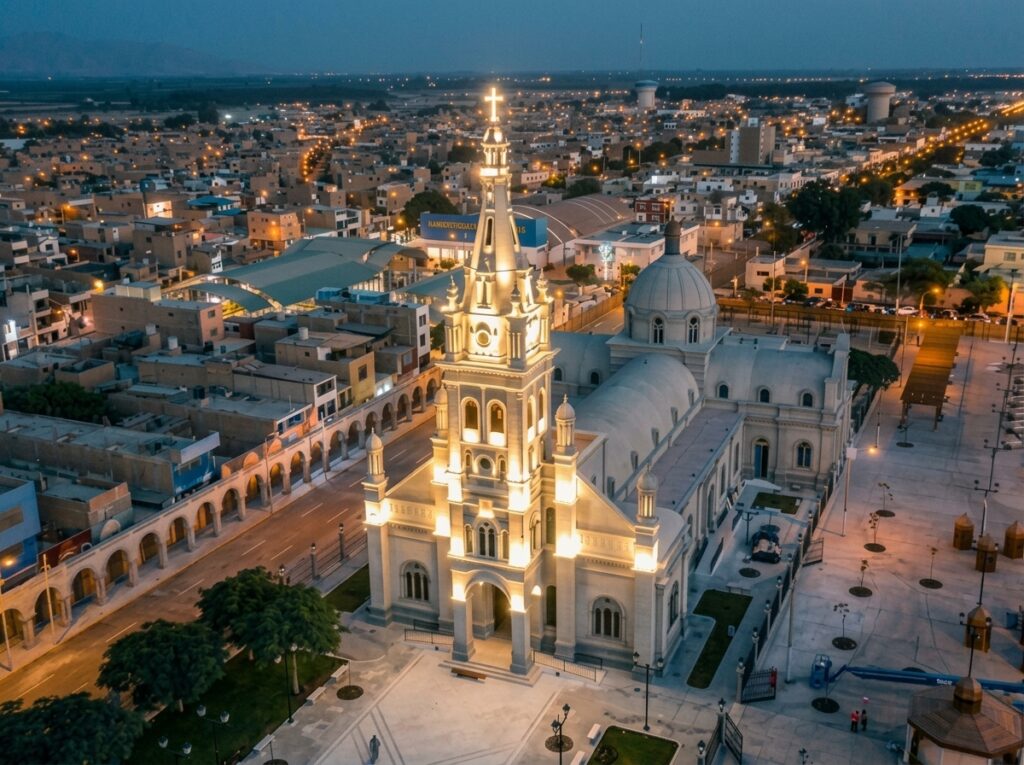
Ica is the capital of the region of the same name and the most important urban center on Peru’s southern coast. It was founded on 17 June 1563 by Jerónimo Luis de Cabrera under the name Villa de Valverde del Valle de Ica. After a series of earthquakes forced the settlement to move more than once, it was finally established on its present site in 1633.
The city sits in a fertile valley surrounded by desert, a contrast that explains much of its character: vineyards and cotton fields irrigated by the Ica River, and a sea of sand dunes only a few kilometers away. Today Ica is the capital of Peruvian pisco, a hub for adventure tourism, and the gateway to the Nazca Lines, the Paracas National Reserve and the Ballestas Islands.
The nickname City of Eternal Sun comes from its exceptional weather. Unlike Lima, which spends much of the winter under a grey, humid sky, Ica records around 3,437 hours of sunshine per year and almost no rainfall brief showers occur only between January and March.
This is a result of its position in the coastal desert, sheltered from the sea mist that covers much of the Peruvian shoreline. The outcome is a stable, luminous climate that makes the city and its surroundings accessible all year round, and that has turned the valley into one of the most productive wine-growing areas in the country.
Where is Ica?
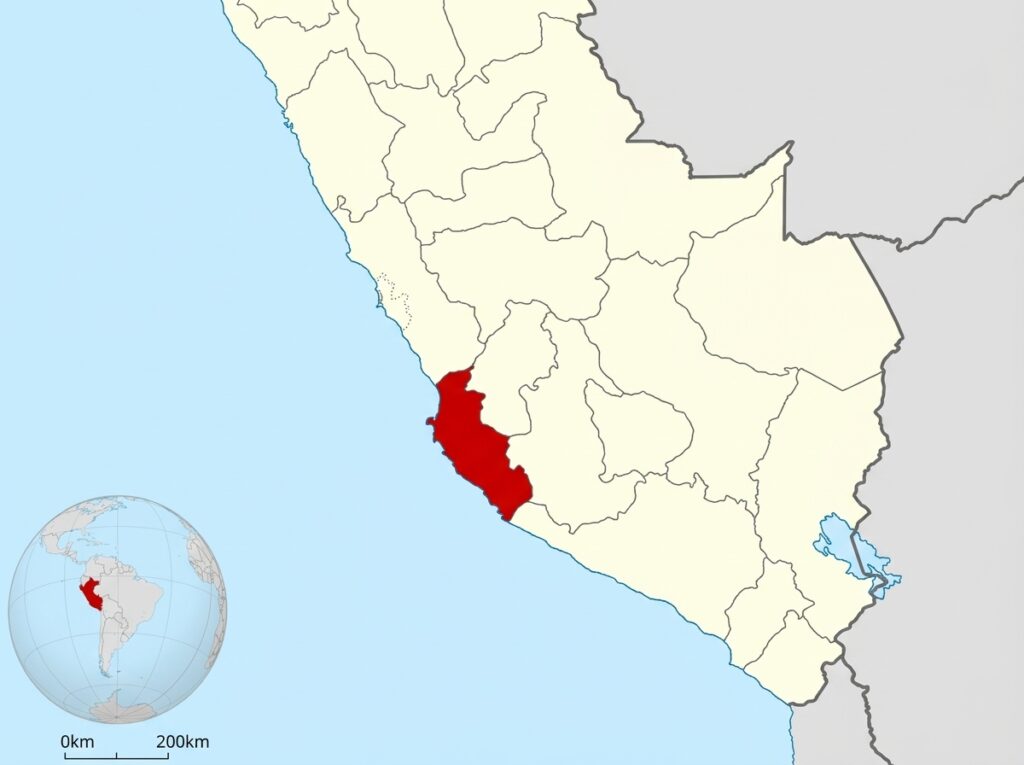
Ica lies on the southern coast of Peru, in the Pacific coastal desert, at approximately 406 meters (1,332 feet) above sea level. It is the capital of both the province of Ica and the region of Ica, which also includes the provinces of Chincha, Pisco, Palpa and Nazca.
From Lima, the city is about 300 kilometers (186 miles) away along the Pan-American Highway South, a journey of 4 to 5 hours by bus or car. It is one of the most accessible getaways from the capital and a standard stop on routes continuing toward Arequipa, Cusco and the far south of the country.
The main attractions of the region are all within easy reach of the city:
- Huacachina: 5 km (about 10 minutes by taxi).
- Paracas: 72 km (about 1 hour).
- Nazca: 143 km (about 2 hours).
- Pisco and Tambo Colorado: in the neighboring province of Pisco, to the north of the region.
History and Culture of Ica
The Ica valley and the neighboring valleys of Pisco, Chincha, Palpa and Nazca hold one of the richest cultural sequences in pre-Hispanic Peru. For more than two thousand years these desert lands were home to societies that developed textiles, ceramics, hydraulic engineering and geoglyphs of remarkable sophistication.
The extreme dryness of the desert has preserved that legacy in exceptional condition: mantles, funerary bundles and organic remains that would have disappeared centuries ago in any other climate. To that inheritance were added the Inca presence and, from the sixteenth century onward, the winemaking tradition brought by the Spanish and shaped by Indigenous and Afro-Peruvian hands.
The Paracas culture developed roughly between 800 BC and 200 AD across the valleys of Pisco, Chincha, Ica, Palpa and Nazca. It was discovered in 1925 by the Peruvian archaeologist Julio César Tello, who two years later excavated more than 400 funerary bundles at Cerro Colorado, all oriented toward the bay of Paracas, at the site he named the Wari Kayan Necropolis. Paracas is celebrated for its embroidered mantles among the finest textiles of the ancient world and for its practices of cranial deformation and trepanation.
The Nazca culture, a direct heir to Paracas, flourished approximately between 100 BC and 800 AD. It is known worldwide for the Nazca Lines, but its legacy goes much further: high-quality polychrome ceramics, the ceremonial center of Cahuachi, and the Cantalloc aqueducts, a system of spiral filtration galleries that still carries water across the desert more than fifteen centuries later.
The Chincha culture emerged during the Late Intermediate Period across the valleys of Chincha, Pisco, Ica and Nazca. It was a society of merchants and seafarers whose principal center, La Centinela, covers some 400,000 square meters in Chincha Baja, with walls decorated in high and low relief.
Inca influence arrived when the Tahuantinsuyo annexed the region around 1476, during the reign of Túpac Inca Yupanqui and following the campaigns begun by Pachacútec. The Incas respected the standing of the lord of Chincha, one of the very few regional rulers permitted to be carried in a litter alongside the Sapa Inca. From that period survives Tambo Colorado, in the Pisco valley, one of the best-preserved Inca adobe complexes on the Peruvian coast.
When Is the Best Time to Visit Ica?
Ica can be visited all year round. As a desert destination with almost no rainfall, there is no season to avoid: the difference between months is one of temperature, not accessibility.
The annual average temperature is around 22 °C (72 °F), with highs reaching 28 °C (82 °F) and lows near 15 °C (59 °F). Summer, from December to March, is the hottest and brightest season, with March the warmest month. Winter, from June to September, is dry, sunny and mild, with August the coolest month and nights that can drop below 13 °C (55 °F).
For desert activities, the time of day matters more than the month. Between 11:00 and 15:00 the sun is at its most intense and the sand becomes very hot, so dune buggy rides and sandboarding are best enjoyed early in the morning or late in the afternoon, when the light across the dunes is also at its finest. If you travel between December and March, bear in mind that this is the Peruvian high season and booking ahead is advisable.
What to See and Do in Ica
Ica offers a rare combination of desert landscapes, coastal wildlife, archaeology and wine tourism. Some attractions lie within the city or a few minutes away, while others are visited on half-day or full-day excursions.
Most travelers build their itinerary around three pillars: the dunes of Huacachina, the Paracas coastline, and the pisco wineries of the valley adding the Nazca Lines if they have an extra day.
Huacachina
Huacachina is a natural oasis just 5 kilometers from the center of Ica, encircled by some of the tallest sand dunes in South America. Its lagoon, fringed by palms and huarango trees, appears on the Peruvian 50-sol banknote and is one of the country’s most recognizable images.
It is the heart of adventure tourism in the region. Dune buggies race across dunes more than 100 meters high, and their slopes are used for sandboarding, with runs ranging from gentle 20-meter descents for beginners to far steeper lines for the experienced. The most sought-after moment is sunset, when the top of the dunes opens onto a view of the oasis, the city of Ica and the open desert beyond.

Paracas and the Ballestas Islands
Paracas belongs to the province of Pisco, within the region of Ica, and lies about 72 kilometers from the city. It is the departure point for excursions to the Ballestas Islands, one of the most popular wildlife experiences on the Peruvian coast.
The tour is made by boat and lasts around two hours, with regular departures at 8:00 and 10:00. Visitors do not disembark, as the islands are a protected area, but from the boat you can watch colonies of sea lions, Humboldt penguins and guano birds such as the guanay cormorant, the Peruvian booby and the Inca tern and, with luck, dolphins. On the way out, the boat passes the Paracas Candelabra, a geoglyph roughly 180 meters tall carved into the hillside of the peninsula and clearly visible from the water.

Paracas National Reserve
Established on 25 September 1975, the Paracas National Reserve protects some 335,000 hectares, of which around 117,000 are desert and 218,000 are Pacific Ocean. It is Peru’s flagship marine and coastal protected area.
Its landscape is a succession of cliffs, bays and desert running straight down to the shore. Among its most visited spots are Playa Roja (Red Beach), whose sand owes its color to the pink diorite of the surrounding hills, and the rock formation known as La Catedral, largely brought down by the 2007 earthquake but still a striking viewpoint.
The reserve is home to close to 200 bird species, along with sea lions, Humboldt penguins and abundant marine life. It is also a key stopover for migratory birds and, at certain times of year, a place to observe flamingos in the bay.
The Nazca Lines
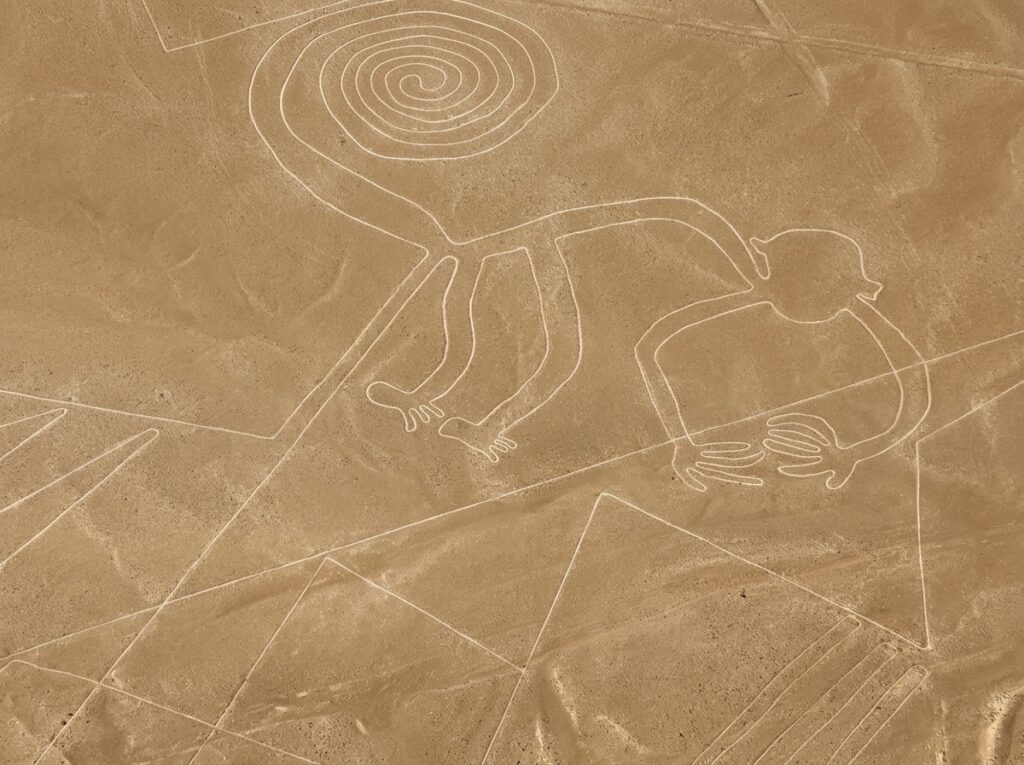
The Nazca Lines are a vast group of geoglyphs traced across the desert floor: straight lines, geometric shapes and depictions of animals and plants spread over roughly 750 square kilometers on the Jumana pampa, in the province of Nazca, some 420 kilometers south of Lima and about two hours from the city of Ica.
They were brought to scholarly attention in 1927 and declared a UNESCO World Heritage Site in 1994. The best-known figures include the giant bird measuring around 300 meters, the monkey at roughly 135 meters, the hummingbird, the condor, the spider, the dog and the human figure popularly called “the astronaut”. They survive thanks to an environment with virtually no rain and a soil surface that barely erodes.
Their purpose is still debated. The German researcher María Reiche, who devoted decades to documenting and protecting them, argued that they functioned as a vast astronomical calendar; other hypotheses connect them to rituals tied to water and fertility, or to ceremonial walking routes. They can be seen from an observation tower beside the Pan-American Highway, but the only way to appreciate their full scale is a flight over the lines by light aircraft.
Pisco Wineries and the Wine Route
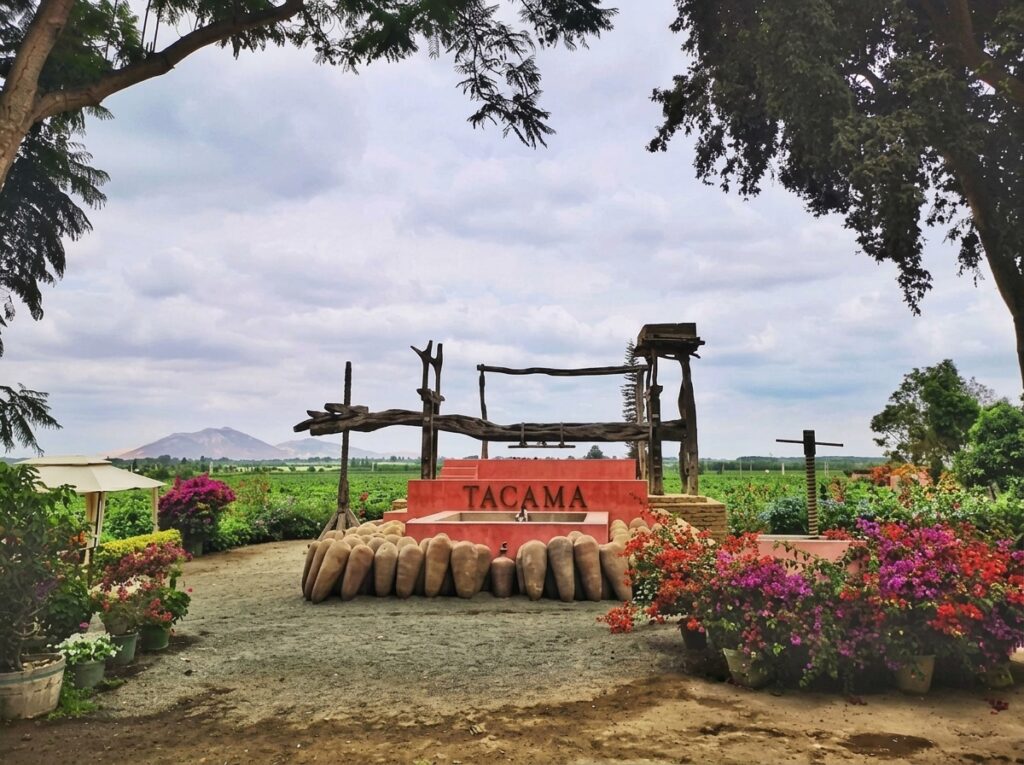
Ica is regarded as the capital of pisco. Vines reached the valley in the sixteenth century and production of wine and grape brandy has continued ever since: some local wineries are more than 400 years old. Peruvian pisco holds a denomination of origin, reserving the name for spirits produced in specific areas of the country and made by traditional methods.
The Pisco Route makes it possible to visit both industrial and artisanal wineries in a single day. Among the most popular are Tacama, whose origins date back to 1540 and which keeps one of the oldest vineyards in South America; Vista Alegre, the largest in the country; and small artisanal producers such as El Catador and Lazo, where grapes are still pressed in traditional treading troughs and distilled in clay vessels and copper stills.
Visits usually include a walk through the vineyards, an explanation of the harvest and distillation process, and a tasting of pure, acholado and mosto verde piscos alongside wines and cream liqueurs. Travel in March and you will coincide with the grape harvest and the International Grape Harvest Festival of Ica.
Museums of Ica: A Window Into the Past
The principal museum is the Ica Regional Museum “Adolfo Bermúdez Jenkins”, created in 1946 and opened in December 1947. It holds more than 30,000 cultural objects from five regional cultures: Paracas, Nazca, Wari, Chincha and Inca.
Its highlight is the collection of Paracas mantles and funerary bundles, displayed alongside polychrome Nazca ceramics, quipus, musical instruments and colonial and republican pieces. One of its halls is devoted to bioanthropology, with cranial deformations, trepanations and trophy heads that illustrate the ritual and medical practices of these societies.
On the Plaza de Armas you will also find the Javier Cabrera Scientific Museum, a private collection of some 11,000 engraved stones assembled from 1966 onward by the Ica physician Javier Cabrera Darquea. It is a curious and much-discussed stop, though it is worth noting that the archaeological community does not accept a pre-Hispanic origin for these pieces.
What to Eat in Ica
The cuisine of Ica brings together produce from the valley, Andean tradition and a strong Afro-Peruvian influence, particularly around Chincha. It is a kitchen of bold flavors, built on chili peppers, dried potato and garden vegetables.
The signature dish is carapulcra with sopa seca, officially declared the representative dish of the region. Carapulcra is a stew of dried potato, panca chili and pork, and one of the oldest preparations in Peru; sopa seca, despite its name, is a noodle dish cooked with achiote, red chili, basil and garlic. The two are served together on the same plate, and that pairing is a local institution.
Other regional staples include chupe and picante de pallares (lima bean stews), morusa, and fish and seafood along the coast around Pisco and Paracas. For dessert, Ica is famous for tejas sweets filled with dulce de leche and candied fruit, coated in fondant along with chocotejas, frejol colado and cassava chapanas.
When it comes to drinks, pisco takes center stage, served neat or in a pisco sour or chilcano. The region’s wines and cream liqueurs are also worth trying, as is cachina, a lightly fermented grape must available only around the harvest season.

How Many Days Do You Need in Ica?
In one day you can already get a full first taste of the region: a morning visit to one or two pisco wineries, lunch in the city, and an afternoon in Huacachina with dune buggies, sandboarding and sunset over the dunes. This is the format of most day trips departing from Lima.
With two days you can add Paracas: a morning boat tour to the Ballestas Islands followed by a drive through the Paracas National Reserve, taking in Playa Roja and the coastal viewpoints. That also leaves time for the Regional Museum and the historic center of Ica.
With three days or more, Nazca comes into play: the flight over the lines, the Cantalloc aqueducts and the ceremonial center of Cahuachi. This is also the margin you need to take the Pisco Route at a relaxed pace or to visit Tambo Colorado in the Pisco valley.
Thanks to its location, Ica fits naturally into longer southern Peru itineraries. Many travelers combine it with Lima, Paracas, Nazca and Arequipa before continuing on to Cusco, since all of these destinations are linked by the Pan-American Highway South.
Tips for Visiting Ica
Sun protection. This is the single most important piece of advice in a destination with more than 3,400 hours of sunshine a year. Use high-factor sunscreen and reapply every two or three hours, especially in the desert, where the sand reflects the radiation back at you. A wide-brimmed hat and sunglasses are essential.
Clothing and footwear. Light, pale-colored clothing for the day, and a jacket or fleece for the evening: in the desert the temperature falls quickly once the sun goes down. For the dunes, wear closed shoes you can easily empty of sand sandals are a poor choice on hot midday sand.
Hydration. The dry climate dehydrates you without your noticing. Always carry water, particularly during desert excursions and winery visits, where tastings are far more enjoyable when you are properly hydrated.
Desert activities. Dune buggy rides are genuinely intense, with steep drops and sharp changes of direction. Avoid them on a full stomach, secure cameras, glasses and hats, and protect electronics from the fine sand, which finds its way into every opening. Always book with formal operators using well-maintained vehicles fitted with seat belts. If you have back or neck problems, or are pregnant, check before getting in.
General advice. Carry some cash in Peruvian soles, as artisanal wineries and handicraft stalls do not always accept cards. If you plan to fly over the Nazca Lines, book a morning flight, when there is less turbulence, and avoid a heavy meal beforehand. And if you travel in March, remember that the grape harvest fills the city reserve accommodation well in advance.