
Tambopata
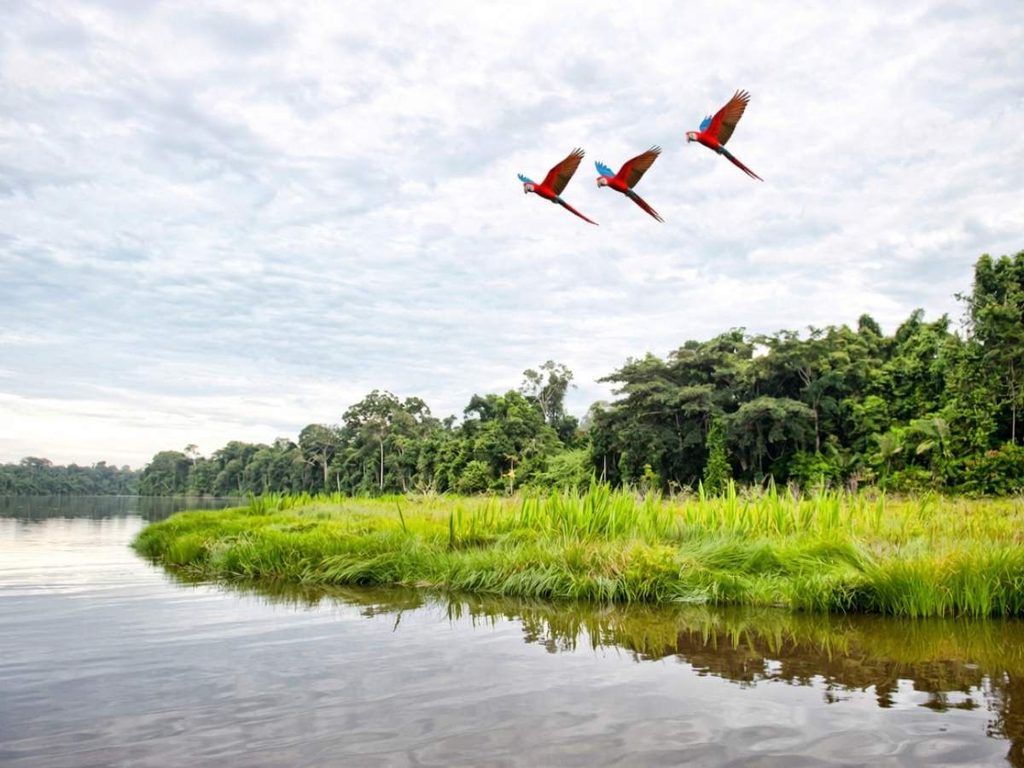
Tambopata is one of the most biologically diverse places on the planet and one of the last great untouched rainforests left in South America. Located in south-eastern Peru, it’s a mix of tropical forest, rivers, lakes and wildlife so varied that it’s become one of the world’s top destinations for nature lovers.
The Tambopata National Reserve is in the Madre de Dios region, south of the Tambopata River and the Madre de Dios River. It covers 274,690 hectares (about 679,000 acres), making it one of the largest protected natural areas in Peru. To the south, it borders the Bahuaja-Sonene National Park, and together they form one of the most important conservation areas in the country.
Tambopata is about 260 km east of Cusco, and the gateway to the reserve is the city of Puerto Maldonado, capital of the Madre de Dios region. From there, the reserve itself is only about 30 minutes away by boat, although the full journey can take several hours depending on exactly where inside the reserve you’re heading.
A Bit of History: How This Area Was Protected
The area officially became a National Reserve on 4 September 2000, through Supreme Decree N.º 048-2000-AG, although the process to protect it began earlier, in 1990, when biologists and conservationists started pushing to safeguard the area from deforestation. At first, it was part of a broader, less strict protected zone known as the “Tambopata-Candamo Reserved Zone.” Scientific studies later confirmed just how valuable the area was for biodiversity, which led to it being upgraded to a National Reserve. Since then, it has been managed by Peru’s National Service of Natural Protected Areas (SERNANP), often working together with conservation organisations, with the goal of protecting local wildlife while also supporting sustainable development for nearby communities.
One of the Most Biodiverse Places on Earth
Tambopata is home to an extraordinary concentration of wildlife. Over 600 species of birds have been recorded here, along with around 1,200 species of butterflies, roughly 170 species of mammals, more than a hundred species of amphibians and reptiles, and several hundred species of fish, plus thousands of plant species. Some of its most famous animals include macaws, jaguars, pumas, giant otters, tapirs and monkeys, many of which can be spotted in the wild during tours through the reserve.
This incredible variety exists because of the many different habitats found within the reserve: lowland Amazon rainforest, bamboo forests, flooded plains, oxbow lakes, and palm swamps where birds like the blue-headed macaw nest. The reserve is also the ancestral home of the indigenous Ese Eja people, as well as other communities such as the Harakbut and the Matsigenka, who have a long-standing connection to this land.
Climate and the Best Time to Visit
Tambopata has a warm, humid climate all year round, with average daytime temperatures between 24°C and 31°C (75°F to 88°F). The dry season, from May to October, usually brings less rain and fewer mosquitoes, making it the most comfortable time to explore the forest trails. The rainy season, from November to April, raises river levels and makes the landscape even greener, though it also brings more humidity and rainfall.
How to Get to Tambopata
Puerto Maldonado is the starting point for any visit to Tambopata. You can fly there from Lima (about 1 hour 40 minutes) or from Cusco (around 25 minutes), with daily flights available from both cities. Once in Puerto Maldonado, the journey continues by river: a short transfer takes you from the airport to the port, and from there a boat travels up the Tambopata or Madre de Dios river to your final destination — a trip that already gives you a first taste of the Amazon landscape.
One of the Most Biodiverse Places on Earth
Tambopata is home to an extraordinary concentration of wildlife. Over 600 species of birds have been recorded here, along with around 1,200 species of butterflies, roughly 170 species of mammals, more than a hundred species of amphibians and reptiles, and several hundred species of fish, plus thousands of plant species. Some of its most famous animals include macaws, jaguars, pumas, giant otters, tapirs and monkeys, many of which can be spotted in the wild during tours through the reserve.
This incredible variety exists because of the many different habitats found within the reserve: lowland Amazon rainforest, bamboo forests, flooded plains, oxbow lakes, and palm swamps where birds like the blue-headed macaw nest. The reserve is also the ancestral home of the indigenous Ese Eja people, as well as other communities such as the Harakbut and the Matsigenka, who have a long-standing connection to this land.
The Most Popular Places to Visit Inside the Reserve
Lake Sandoval. This is the most visited spot in Tambopata. About 3 km long, it’s known for its calm waters and for being home to families of giant otters, and it also has an observation tower where you can spot a wide range of birds.
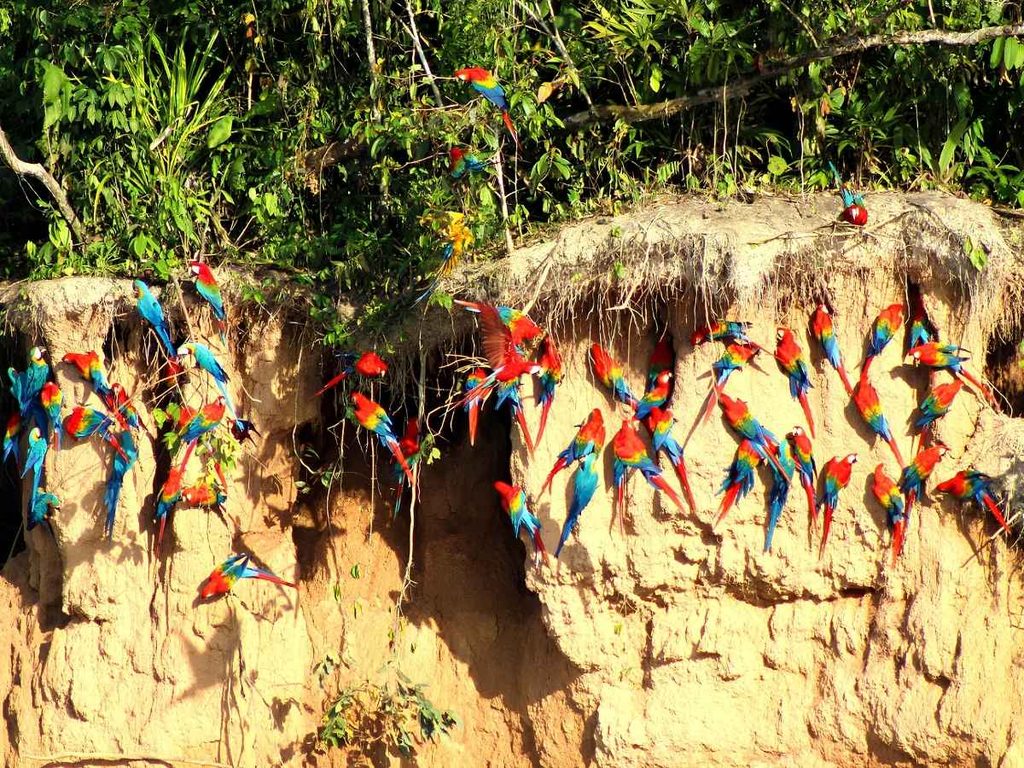
Macaw Clay Licks. These are riverbank cliffs formed by erosion, which expose mineral-rich clay that hundreds of macaws, parrots and parakeets come to feed on, especially in the early morning. The “Chuncho” and “Colorado” clay licks are the best known, and both are reached by boat.
Other Lakes and Lagoons. Besides Lake Sandoval, the reserve has other oxbow lakes, such as Cocococha and Sachavacayoc, which are also included in some tours and offer a different view of the Amazon’s water ecosystems.
Indigenous Communities. Some native communities in the area, such as the Ese Eja, welcome visitors and share parts of their traditions and their relationship with the forest, always within a framework of respectful, responsible tourism.

General Tips for Visiting
Visiting Tambopata means heading into a remote natural environment, so it’s worth keeping a few basics in mind: pack lightweight, quick-drying clothes in neutral colours, bring insect repellent and sunscreen, and wear comfortable, waterproof footwear for walking on damp trails. Electricity at most lodges runs on generators with set hours, so it’s a good idea to bring spare batteries for cameras and other devices. Since this is a protected area, it’s also important to always follow your guide’s instructions and avoid disturbing the wildlife in any way.
Beyond being a tourist destination, Tambopata is also a world-renowned centre for scientific research and Amazon conservation. Its extreme biodiversity, untouched landscapes, and indigenous communities that still follow their traditional way of life make it one of South America’s last great natural sanctuaries — a place where tourism and environmental protection are working to move forward hand in hand.