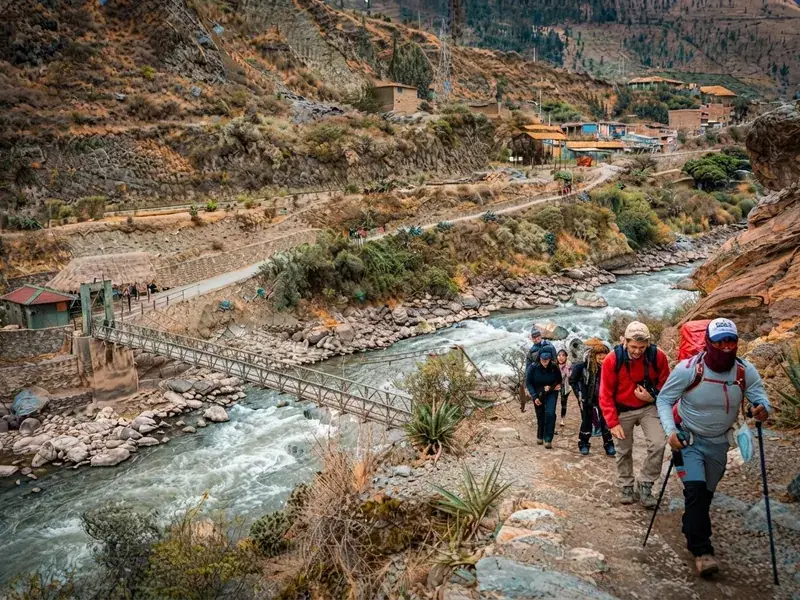
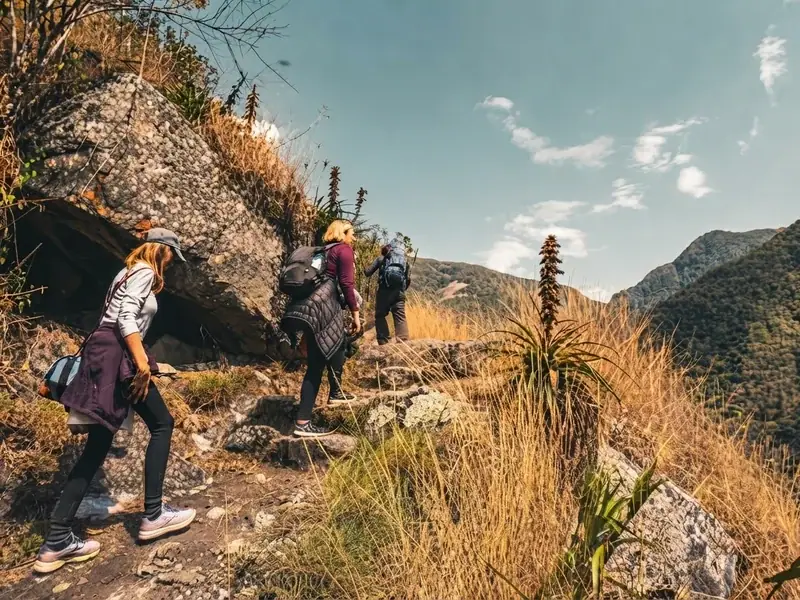
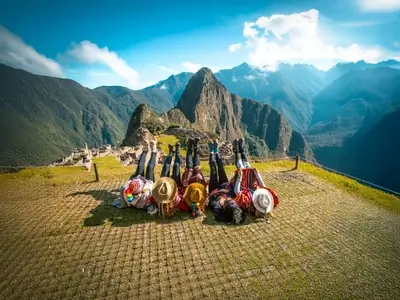
The Classic Inca Trail to Machu Picchu is the most famous trek in South America. Over 4 days and 3 nights you walk original Inca stone paths through Andean highlands, cloud forest and two mountain passes, and arrive at the Sun Gate for your first view of Machu Picchu at dawn.
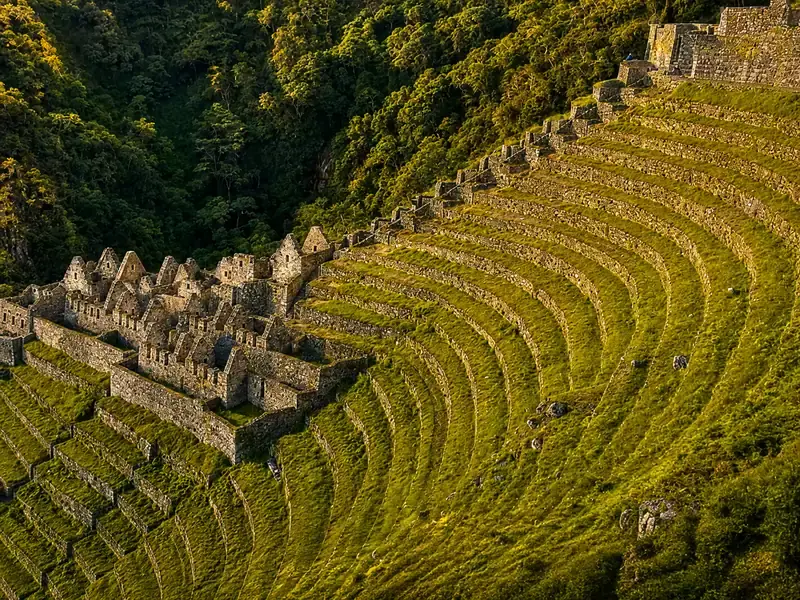
Along the way you visit Inca sites that can only be reached on foot: Runkuracay, Sayacmarka, Phuyupatamarca and Wiñayhuayna. No bus or train goes there.
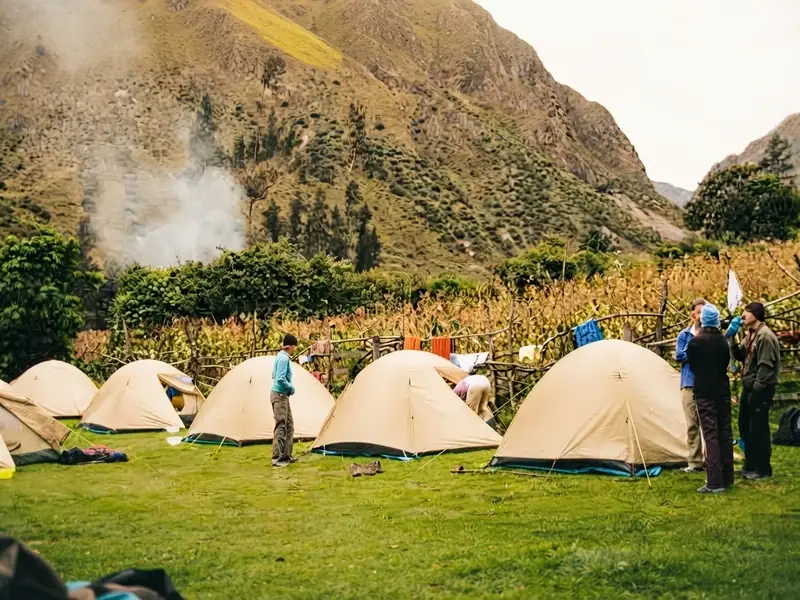
Our Classic Inca Trail tour is all-inclusive. We secure your government permit, provide the camping equipment, and you trek with a bilingual guide, trekking chefs and trained porters from KM 82 to the Sun Gate.
At a glance
The Classic Inca Trail is a 4-day, 3-night trek of about 42 km from KM 82 to Machu Picchu, crossing Dead Woman's Pass at 4,215 m (13,828 ft) and entering the citadel through the Sun Gate at dawn. Only 500 permits are issued per day, so book 4 to 6 months ahead.
Start
KM 82, 2,700 m (8,858 ft)
Finish
Machu Picchu via the Sun Gate
Distance
About 42 km (26 miles)
Highest point
Dead Woman's Pass, 4,215 m (13,828 ft)
Permits
500 per day, about 200 for trekkers
Best season
May to September (dry season)
Closed
Every February
Minimum age
8 years
Updated · Permit rules by SERNANP and Peru's Ministry of Culture
Tour Details
Why hike the Classic Inca Trail
Why the Inca Trail Will Change You
Four days on stone paths built more than five centuries ago, nights under Andean skies and an arrival at Machu Picchu the way the Incas intended: through the Sun Gate, at dawn, on foot.
A Living Journey Through Inca History
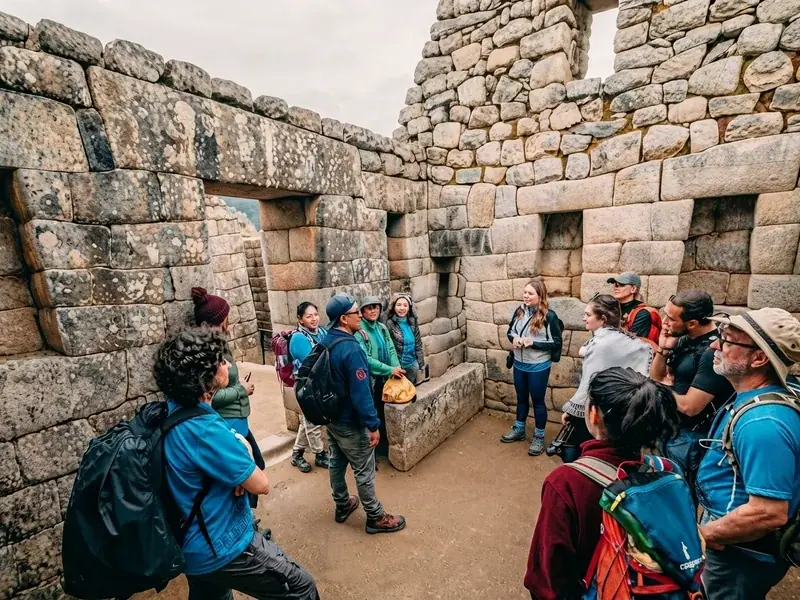
You pass ceremonial centres, administrative sites, rest stops for messengers and astronomical observatories hidden among the mountains. Your guide explains the history and legends at every stop, so you understand what you are seeing.
An Extraordinary Natural World
The trail runs through the Historic Sanctuary of Machu Picchu, across high grasslands, cloud forest and subtropical jungle. Orchids, giant ferns and bromeliads line the path, and you may see the spectacled bear or the Andean cock-of-the-rock.
Two Mountain Passes
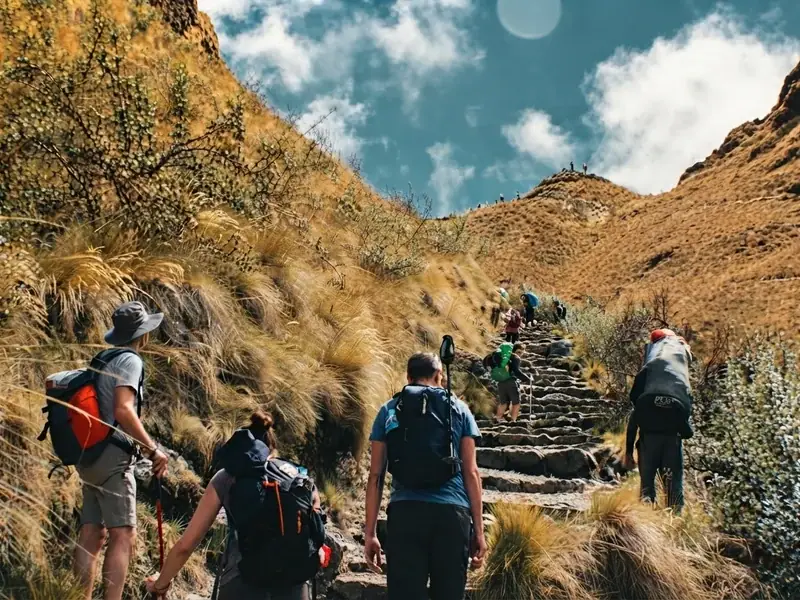
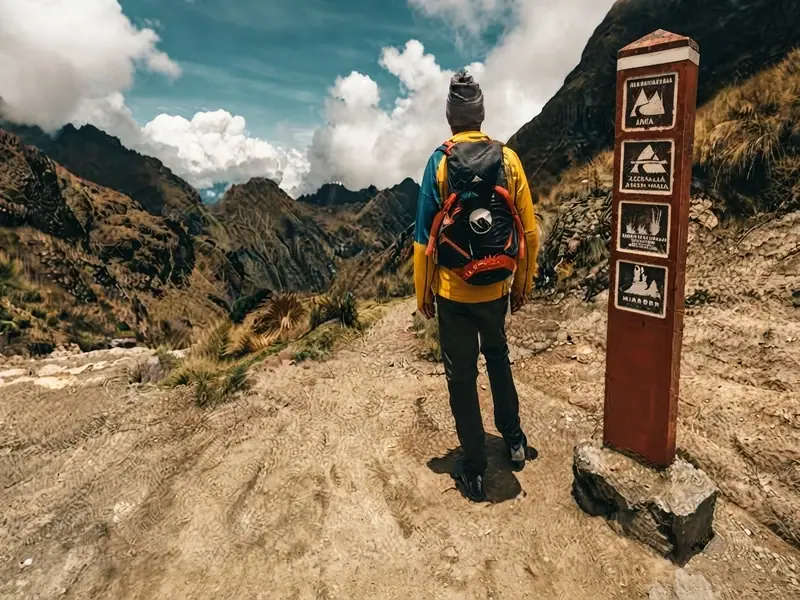
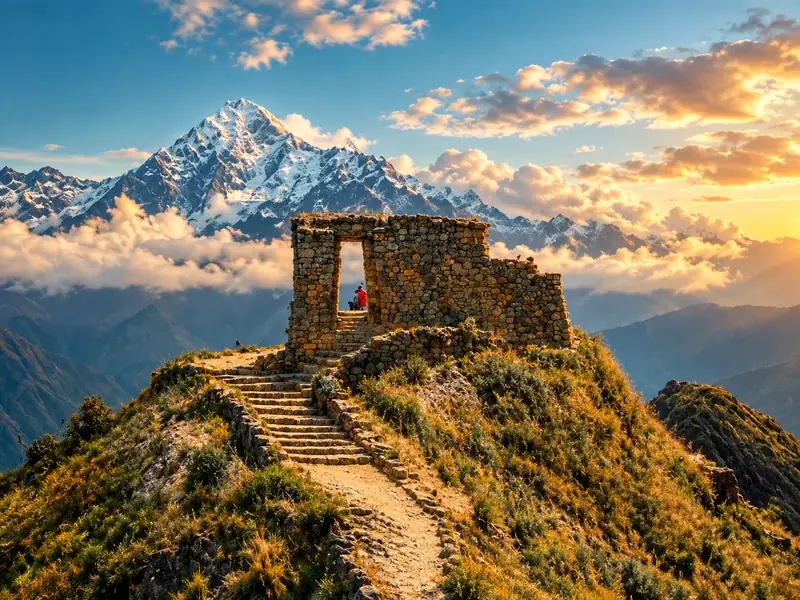
On Day 2 you climb to Dead Woman's Pass (Warmiwañusca) at 4,215 m (13,828 ft), the highest point of the route. On Day 3 you cross Runkuracay Pass at 3,950 m (12,960 ft), through cloud forest and ruins.
A Dedicated Team Behind Every Step
Your bilingual guide sets the pace and explains the route, porters carry the camping equipment, and our mountain chefs cook hot Andean and international meals at every camp.
Arriving Through the Sun Gate
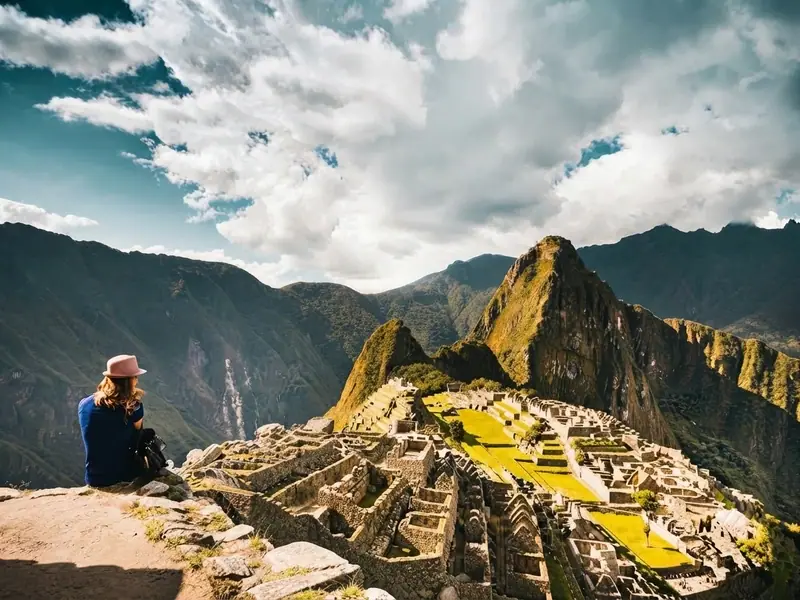
On Day 4 you wake at 3:00 am, walk by headlamp and reach Inti Punku, the Sun Gate, as the first light hits the citadel. Visitors arriving by train never see this view: they enter by bus from below.
Licensed, Local and Accountable
We are a locally owned tour operator based in Cusco, licensed by the Regional Government of Cusco (authorization AG-2595). We are the operator, not a reseller: on the trail you deal directly with the people responsible. Our porters are paid fairly and treated with respect.
Itinerary: day by day
Day 1Ayapata camp3,300 m
Day 2Pacaymayo camp3,500 m
Day 3Wiñayhuayna camp2,650 m
Day 4Machu Picchu2,430 m
All stops and altitudes
Day
Stop
Altitude
1
KM 82
2,700 m (8,858 ft)
1
Hatunchaka
3,000 m (9,843 ft)
1
Wayllabamba
3,300 m (10,827 ft)
1
Ayapata camp
3,300 m (10,827 ft)
2
Llulluchapampa
3,850 m (12,631 ft)
2
Dead Woman's Pass
4,215 m (13,829 ft)
2
Pacaymayo camp
3,500 m (11,483 ft)
3
Runkuracay
3,750 m (12,303 ft)
3
Runkuracay Pass
3,950 m (12,959 ft)
3
Sayacmarka
3,650 m (11,975 ft)
3
Phuyupatamarca
3,600 m (11,811 ft)
3
Wiñayhuayna camp
2,650 m (8,694 ft)
4
Sun Gate
2,720 m (8,924 ft)
4
Machu Picchu
2,430 m (7,972 ft)
Day 1
Cusco – KM 82 – Ayapata Camp
We pick you up from your hotel in Cusco at 5:00 am and drive to KM 82 (2,700 m (8,858 ft)), the official start of the trail. Here you meet the porter team, pass the permit check and take your first steps on the Inca Trail.
The first section crosses farmland and Andean villages. After about three hours we stop for a buffet lunch at Hatunchaka (3,000 m), where you can buy snacks and water.
In the afternoon the trail climbs gently to Wayllabamba (3,300 m), the last village on the route. From there the path enters the protected sanctuary. We camp at Ayapata and have dinner together before the hardest day.
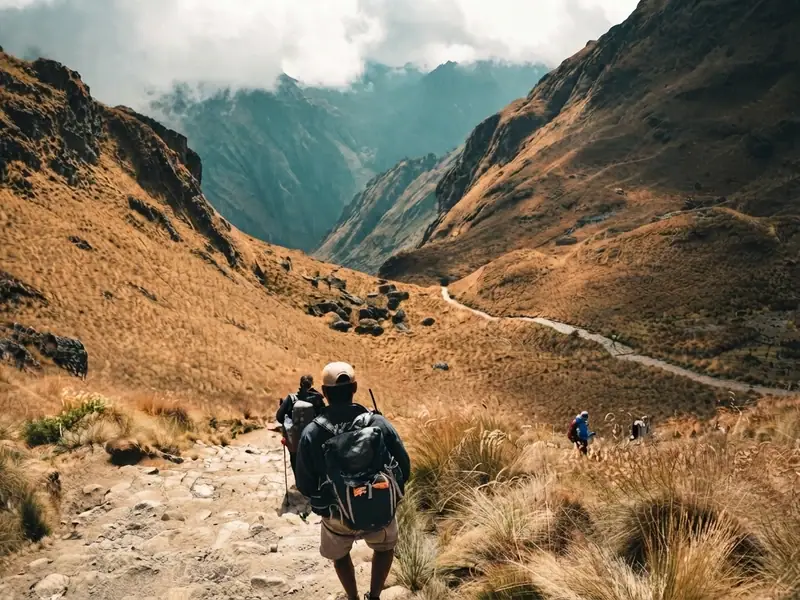
Day 2 is the hardest day of the Classic Inca Trail and the one you will remember most. We climb steadily from Ayapata to Llulluchapampa (3,850 m), an open plateau with the pass in view.
The final climb to Warmiwañusca, Dead Woman's Pass (4,215 m (13,828 ft)) is steep and the altitude makes every step heavier. At the top you look back over the valleys you have walked.
We then descend to the Pacaymayo valley (3,500 m), where the chefs have lunch ready at camp. The afternoon is free to rest.
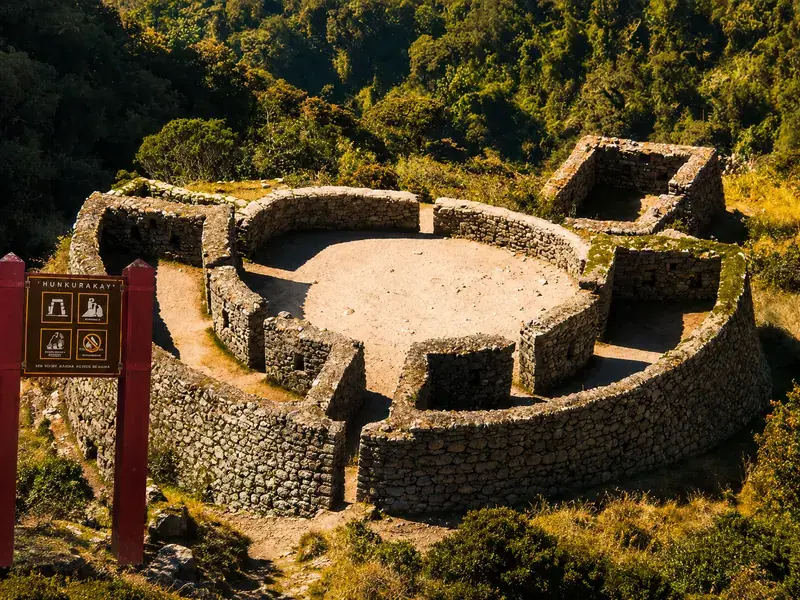
Day 3 is the longest day and the most scenic. On the way up from Pacaymayo we visit Runkuracay (3,750 m), a circular ruin with valley views, and then cross the second pass, Runkuracay Pass (3,950 m (12,960 ft)).
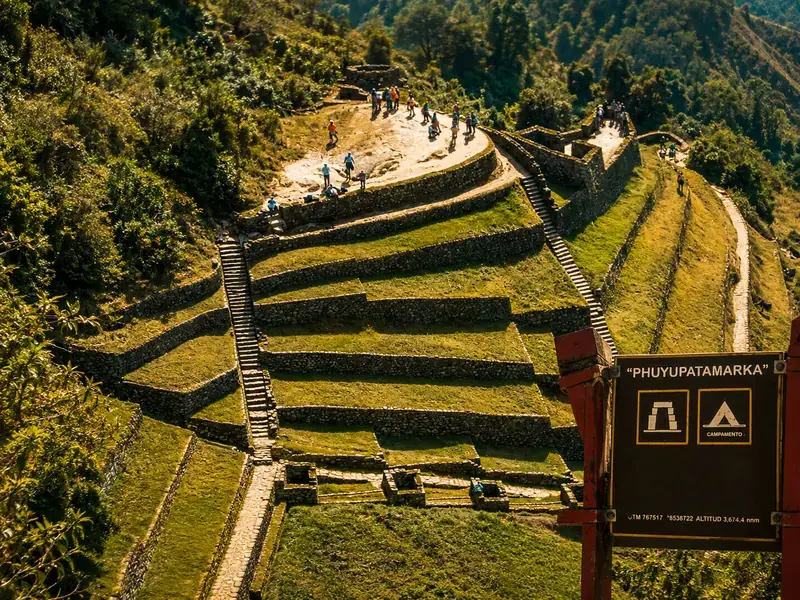
Next come Sayacmarka (3,650 m), a fortress on a narrow ridge, and Phuyupatamarca (3,600 m), the "town above the clouds", where we stop for lunch among terraces and mist.
In the afternoon the trail drops steeply through cloud forest to our last camp near Wiñayhuayna (2,650 m), one of the most impressive sites on the route.
We wake at 3:00 am, pack up camp and walk by headlamp to the last checkpoint. After about one hour you reach Inti Punku, the Sun Gate (2,720 m (8,924 ft)), the original Inca entrance, with Machu Picchu below you in the first morning light.
From the Sun Gate you walk down for about an hour to the classic viewpoint. Your guide then leads a 3-hour tour of the citadel: the Temple of the Sun, the Intihuatana stone, the terraces and the residential sectors.
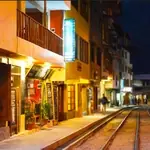
After the tour we take the bus down to Aguas Calientes for free time and lunch. In the afternoon you take the train to Ollantaytambo and our transfer back to Cusco, arriving in the evening.
Includes today:
Breakfast at Wiñayhuayna camp
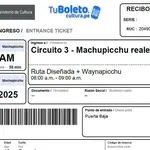
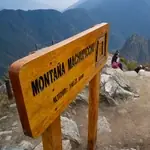
Machu Picchu entrance ticket
3-hour guided tour of Machu Picchu
Bus from Machu Picchu down to Aguas Calientes
Train Aguas Calientes to Ollantaytambo
Transfer back to Cusco
Max altitude: 2,720 m
What's included
Includes
Hotel pickup in Cusco
Private transfer to the trailhead at KM 82
Official Inca Trail permit
Machu Picchu entrance ticket
Professional bilingual guide (English/Spanish)
Porter team for all group camping equipment
Dome tents (2 people per tent)
Dining tent, kitchen tent and toilet tent
Foam sleeping pads
3 breakfasts, 3 lunches and 3 dinners on the trail
Afternoon snacks and hot drinks at camp
Emergency oxygen and first aid kit
Bus from Machu Picchu down to Aguas Calientes
Train from Aguas Calientes to Ollantaytambo
Private transfer from Ollantaytambo to Cusco
Not included
Travel insurance (required)
Personal porter for up to 7 kg (US$120)
Huayna Picchu or Machu Picchu Mountain ticket (US$20–24)
A personal porter carries up to 7 kg of your gear for the whole trek, so you hike with a light day pack.
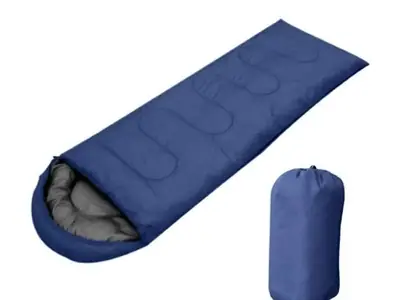
Sleeping Bag Rental US$15
Quality sleeping bag rated to −5 °C / 23 °F, cleaned for each client.
Huayna Picchu Ticket From US$20
The steep mountain behind Machu Picchu. Spots are very limited and sell out months ahead.
Machu Picchu Mountain Ticket From US$20
A quieter alternative to Huayna Picchu with panoramic views of the citadel and valleys.
Extra Night in Aguas Calientes On request
Stay a night in Aguas Calientes and visit the citadel again the next morning.
How to prepare
How fit do you need to be?
Important
The Classic Inca Trail is a challenging trek, but you do not need to be an athlete. In the weeks before your trip, do 30–45 minutes of cardio (hiking, running, cycling or stairs) 3–4 times a week.
Acclimatize in Cusco first
Tip
Cusco sits at 3,400 m (11,150 ft) and the trail reaches 4,215 m (13,828 ft). Arrive in Cusco 2–3 days before the trek: rest, avoid alcohol, drink water and coca tea, and ask your doctor about acetazolamide (Diamox) if you are worried about altitude.
Permits sell out months ahead
Important
Only 500 Inca Trail permits are issued per day, and about 200 of them go to trekkers (the rest are for guides, cooks and porters). For May to September book 4 to 6 months ahead. We need your passport details to register your permit.
What to expect on the trail
Tip
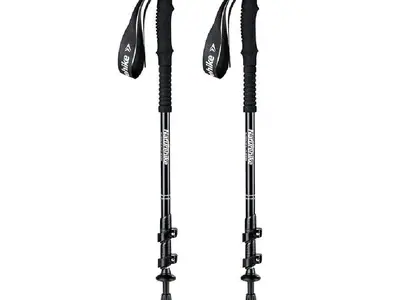
Nights can drop to 0–5 °C (32–41 °F) near Dead Woman's Pass. Rain is possible all year; the dry season is May to September. Paths are rocky and uneven, so trekking poles help. There is little or no phone signal.
Packing list
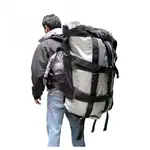
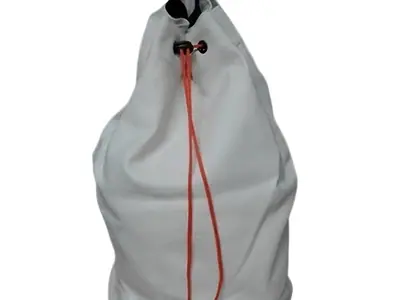
Duffel bag (max 7 kg, carried by porter)
Sleeping bag rated to −5 °C, a change of clothes per day, a warm jacket, camp sandals and a small toiletry kit.
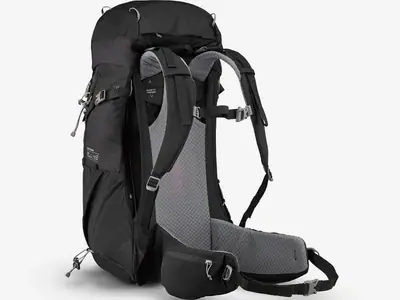
Day pack (10–15 L, you carry)
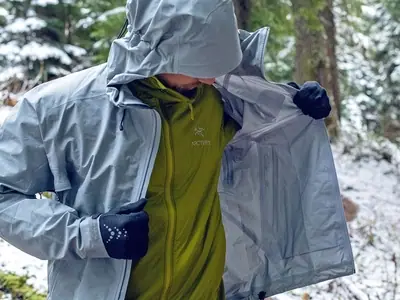
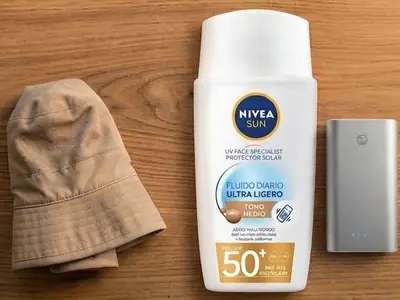
Rain jacket, 2 litres of water, sunscreen, sunglasses, sun hat, headlamp, snacks and your passport for checkpoints.
Clothing and layers
Moisture-wicking shirts, trekking pants, a thermal base layer, 4+ pairs of wool socks, light gloves and a beanie.
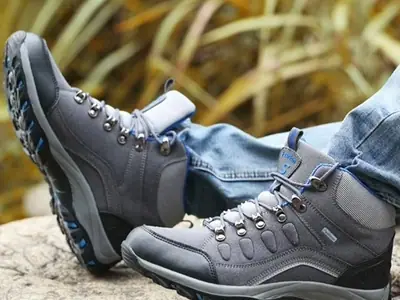
Footwear
Waterproof hiking boots, fully broken in before the trek to avoid blisters.
Sleeping bag
Rated to at least −5 °C, or rent one from us for US$15.
Trekking poles
Strongly recommended for the steep descents on Days 2 and 3.
Personal items
SPF 50+ sunscreen, lip balm, medication, blister plasters, a power bank and cash in soles for tips.
What to leave behind
Leave your suitcase at your Cusco hotel and single-use plastics at home. We follow Leave No Trace principles.
Frequently asked questions
How difficult is the Classic Inca Trail?
It is challenging but achievable for people in good shape. The hardest part is the Day 2 climb to Dead Woman's Pass at 4,215 m (13,828 ft). Good fitness and 2–3 days of acclimatization in Cusco are enough for most travellers.
When is the best time to hike the Inca Trail?
The dry season, May to September, has the most stable weather. The trail closes every February for maintenance.
How far in advance should I book the Inca Trail?
Book 4 to 6 months ahead for May to September. Only 500 permits are issued per day, and we need your passport details at booking.
How many Inca Trail permits are there per day?
500 per day in total, of which about 200 are for trekkers. The rest go to guides, cooks and porters. Permits are issued by SERNANP and Peru's Ministry of Culture.
What is the minimum age for the Inca Trail?
8 years old.
Do I need travel insurance?
Yes. It must cover emergency evacuation and trekking at high altitude up to at least 4,500 m.
Can I hire a personal porter?
Yes. A personal porter carries up to 7 kg of your gear for US$120. This is separate from the group porter team that carries the camping equipment.
What happens if I get altitude sickness on the trail?
Your guide carries emergency oxygen and a first aid kit. If symptoms are severe, we descend immediately. This is why acclimatizing in Cusco for 2–3 days is important.
Is the Inca Trail better than the Salkantay trek?
The Inca Trail is the only route that follows original Inca paths past several archaeological sites and arrives at Machu Picchu through the Sun Gate. Salkantay is higher and wilder, needs no permit and can be booked at shorter notice.
Terms and conditions
Booking and payment
A 40% deposit confirms your booking and secures your permit. The balance is due 30 days before departure, by bank transfer or card.
Cancellation
30 or more days before departure: full refund minus the permit cost. 15–29 days: 50% refund. 14 days or less: no refund. The permit is non-refundable in all cases because it is issued by the Peruvian government.
Permits
Permits are issued in your name and linked to your passport number. They cannot be transferred, and you need your passport at every checkpoint.
Date changes
Date changes depend on permit availability and need a new permit, which cannot be guaranteed.
Force majeure
If the trek is cancelled because of extreme weather, natural disasters, trail closures or government restrictions, we offer a new date or travel credit. The permit cost is not refundable.
Health and fitness
You are responsible for being fit enough for the trek. ViajaXmundo is not liable for injury, illness or inability to finish due to personal health conditions.