
Lima
Lima is the capital city of Peru, sitting right on the coast, facing the Pacific Ocean. It was founded almost 500 years ago, in 1535, and today it’s a proper mix of old and new: you’ll find colonial churches and houses standing right next to modern buildings and trendy restaurants. Nearly every traveller visiting Peru passes through Lima at some point, as it’s the country’s main gateway and is also famous the world over for its food.
To get to Lima, most international flights land at Jorge Chávez International Airport, which is about 45 to 60 minutes from the areas where tourists usually stay, such as Miraflores or Barranco. From Lima, it’s also easy to catch a short flight to Cusco if you fancy visiting Machu Picchu, or to other cities around the country. That’s why many people spend two or three days in Lima at the start or end of their trip, either before or after heading up into the Andes.

A Bit of History and Lima’s Climate
Long before the Spanish arrived, this area was already home to ancient peoples who built mud-brick temples known as huacas. Some of these still stand right in the middle of the city today — one of them sits smack in the middle of Miraflores, surrounded by modern buildings, which is quite a sight to see. Later, in 1535, the Spaniard Francisco Pizarro founded the city of Lima, which went on to become one of the most important cities in the whole of South America during colonial times. That’s why the city centre still has churches, wooden balconies and old houses dating back to that era.
Lima’s climate is warm and it hardly ever rains, though it does get rather foggy at certain times of year. Between December and March it’s warmer and sunnier, with temperatures ranging from 22°C to 29°C, making it a good time for the beach or a stroll along the coast. Between May and October, temperatures drop a little, sitting between 14°C and 18°C, and mornings tend to be foggy, although it still doesn’t rain. April and November tend to be calmer, with weather that’s neither too hot nor too grey — ideal for wandering around the city.
Areas and Places Worth Visiting in Lima
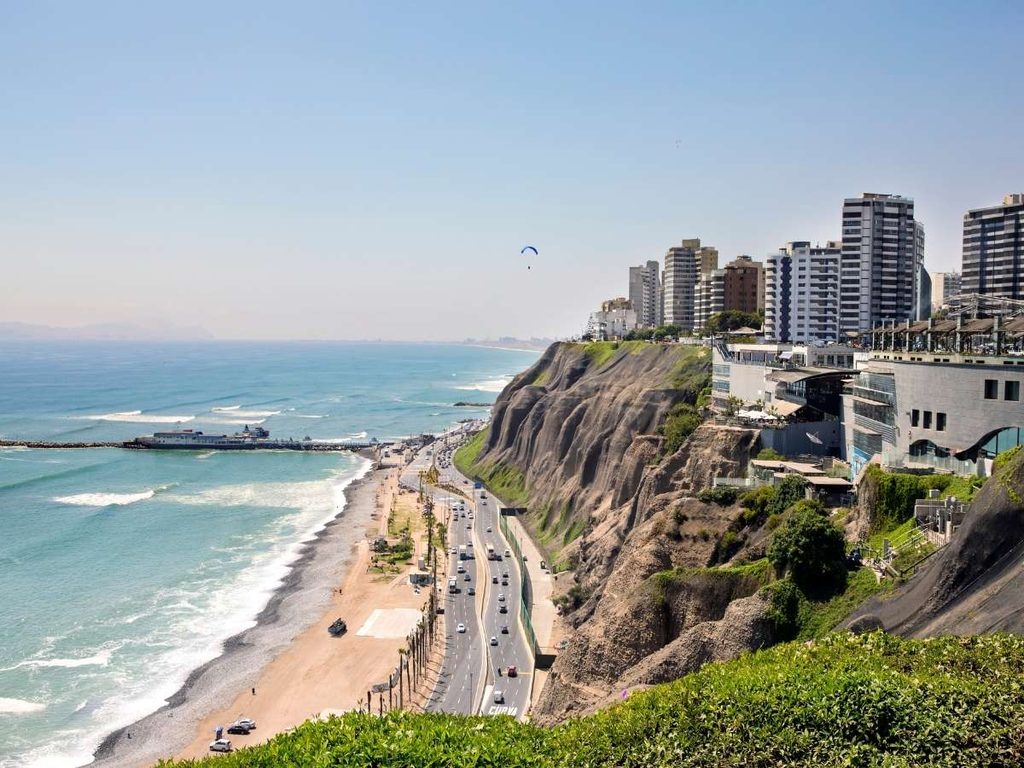
Lima has several areas well worth exploring. The Historic Centre is the oldest part of the city, home to the Plaza Mayor, the Cathedral and a number of colonial churches. Miraflores is a more modern, seaside district, with a lovely seafront promenade for walking, plus parks and shopping centres overlooking the ocean. Barranco is full of art, music and bars, and makes for a great night out. San Isidro, meanwhile, is a quieter area with a park full of centuries-old olive trees, perfect if you fancy something more relaxed.
Just outside Lima, there are some interesting archaeological sites too, such as Pachacamac, an ancient religious centre roughly 40 minutes from the city that can easily be visited in half a day. There, you can walk among pyramids and temples that are over a thousand years old.
Food and Getting Around the City
Without a doubt, what really sets Lima apart is its food, widely regarded as some of the best in South America. Flavours from the coast, the Andes and the jungle all come together here, alongside influences brought over by Spanish, African, Chinese and Japanese immigrants. Dishes such as ceviche, lomo saltado and causa limeña are pretty much a must-try, as is a good pisco sour. You can grab something simple at a local market or head to world-renowned restaurants like Central or Maido.
As for getting around the city, the easiest and safest option is to use app-based taxis or book a private transfer, particularly for longer journeys. There’s also a bus system called the Metropolitano, which connects Miraflores and Barranco with the Historic Centre, though most tourists tend to find taxis a bit more convenient.