
Arequipa
Arequipa is also known as The White City for its old white stone buildings. Arequipa is the second largest city in Peru and the capital of the province of the same name. Unlike other Peruvian cities, Arequipa embodies Peru’s “mestiza” colonial culture: a blend of Peruvian roots and Spanish influences. UNESCO has declared the city and its colonial architecture a World Heritage Site for this multifaceted blend of indigenous origins and Spanish culture.
Arequipa captivates not only with its architecture and volcanic landscapes, but also with its gastronomy and rich traditions. Its cuisine, recognized nationwide, is a testament to the fusion between local ingredients and colonial techniques. Arequipa’s traditions are experienced throughout the year, in festivities full of parades, dances, and cultural events that showcase the pride and identity of its people. Each celebration is an opportunity to discover the authentic essence of this unique city.
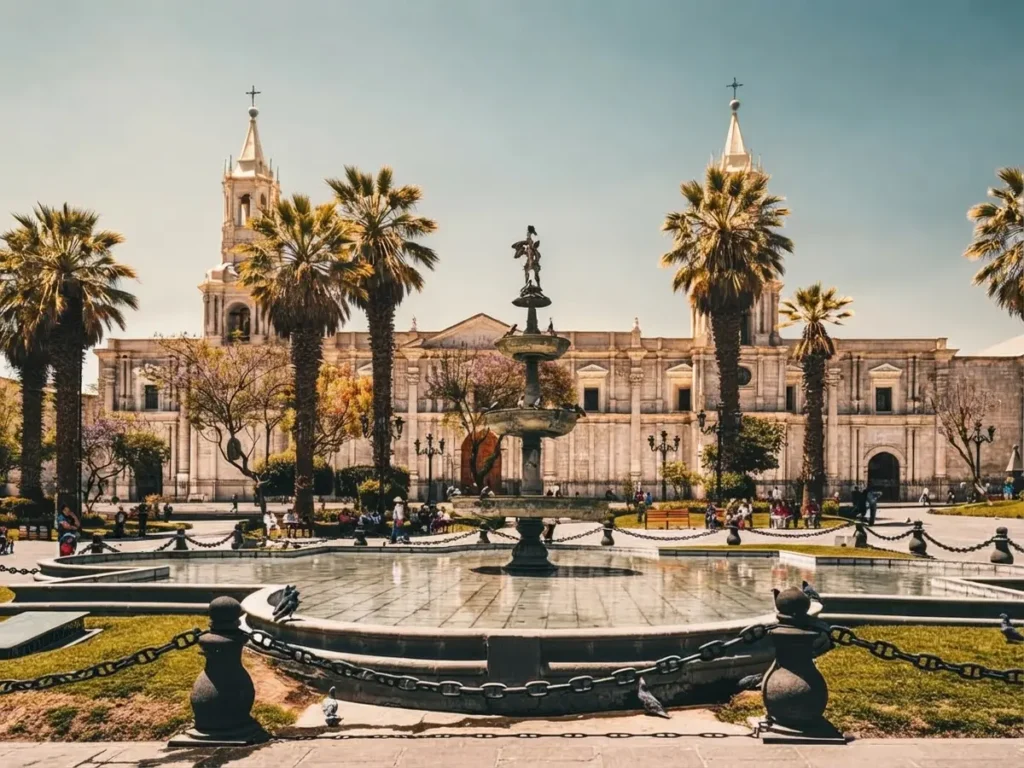
History, Heritage and Economy of Arequipa
Arequipa was founded in August 1540 and has since played an important role in Peru’s history. The city was the setting for one of the most important battles on behalf of Peruvian independence in 1824. Arequipa is the birthplace of many influential Peruvians such as Víctor Belaunde and Nobel Prize in Literature winner Mario Vargas Llosa, author of the novels “The Green House” and “The Time of the Hero.” In addition to its historical importance, Arequipa also plays an important economic role due to its resource deposits: livestock, alpaca leather and wool, handicrafts (textiles), and, of course, tourism.
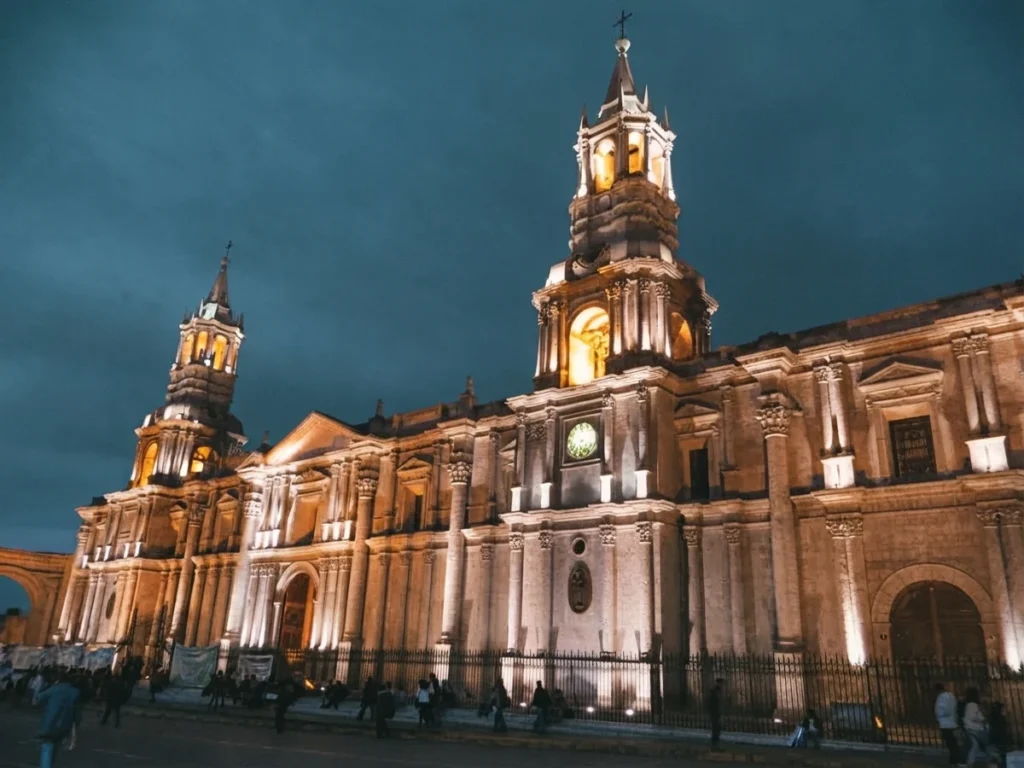
Best Tours and Excursions Around Arequipa
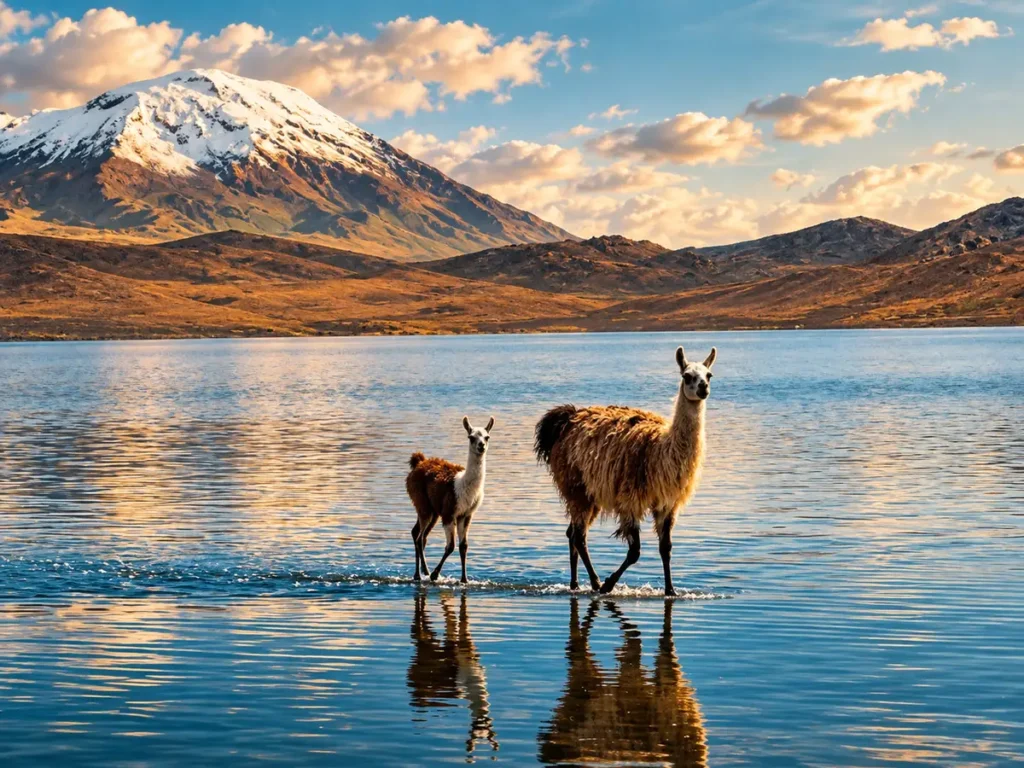
If you’re planning to travel to Arequipa, you can’t miss visiting the famous Plaza de Arequipa and enjoying its iconic colonial buildings, such as the Cathedral and the Santa Catalina Monastery. You can also explore the Valley of the Volcanoes while enjoying the views at Salinas y Aguada Blanca National Reserve, home to alpacas, llamas, and vicuñas grazing near snow-capped volcanoes.
If you’re looking for a more relaxed adventure, you can visit the Chivay hot springs or the Lojen hot springs, known for their rejuvenating properties. The surrounding valleys also offer many opportunities to practice adventure sports, such as rafting on the Colca River, trekking down to the Sangalle oasis, or camping under the stars.
For an enriching cultural experience, consider visiting the picturesque towns of the region, such as Yanque, Maca, and Cabanaconde, where you can get to know local Andean customs, colonial churches, and pre-Inca agricultural terraces up close.
Colca Canyon: One of the World’s Deepest Canyons and Home to the Andean Condor
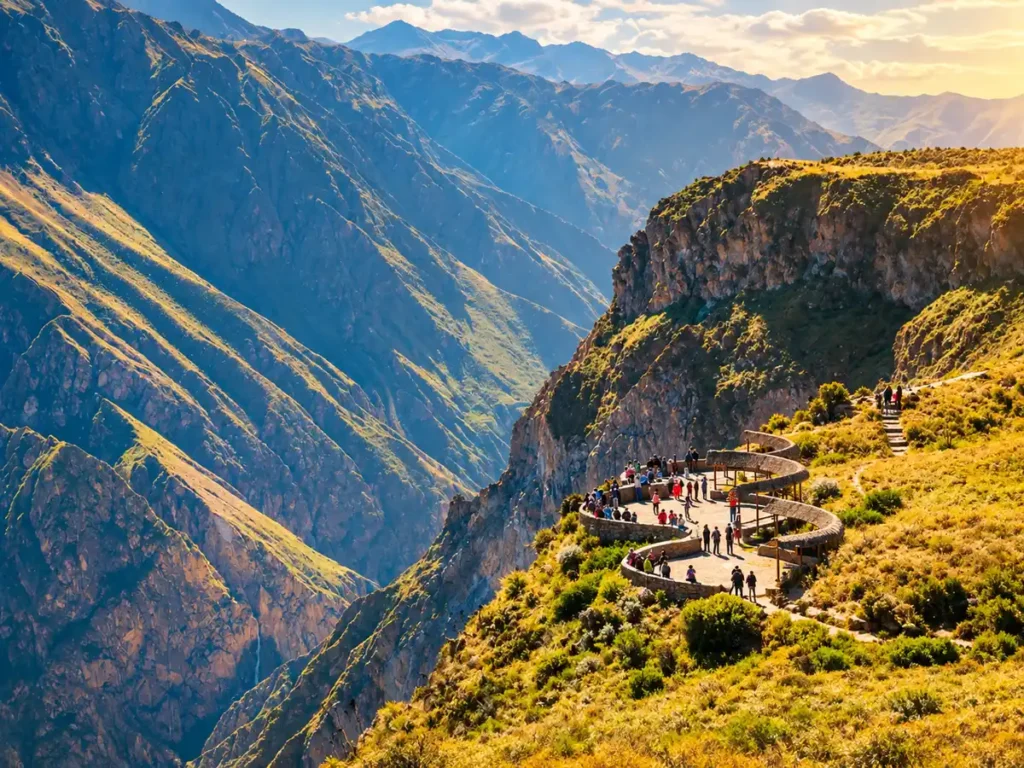
Located about 160 km (3–4 hours by road) north of Arequipa, the Colca Canyon is one of the deepest canyons in the world — over twice as deep as the Grand Canyon in some sections. Carved between the snow-capped peaks of Ampato and Coropuna, the canyon stretches roughly 100 km and shelters more than 100 bird species, over 300 plant species, and dozens of cactus varieties.
The undisputed highlight of the canyon is the Cruz del Cóndor viewpoint, perched above 3,200 meters, where visitors gather early in the morning to watch Andean condors ride the thermal air currents. With a wingspan of up to 3.3 meters, the Andean condor is considered one of the largest flying birds in the world, and seeing it glide just meters away is one of the most memorable experiences in southern Peru.
Beyond condor watching, the Colca Valley offers colorful traditional towns like Chivay, Yanque, and Cabanaconde, natural hot springs such as La Calera and Chacapi, pre-Inca agricultural terraces, and, for more adventurous travelers, multi-day treks down into the canyon to the Sangalle oasis.
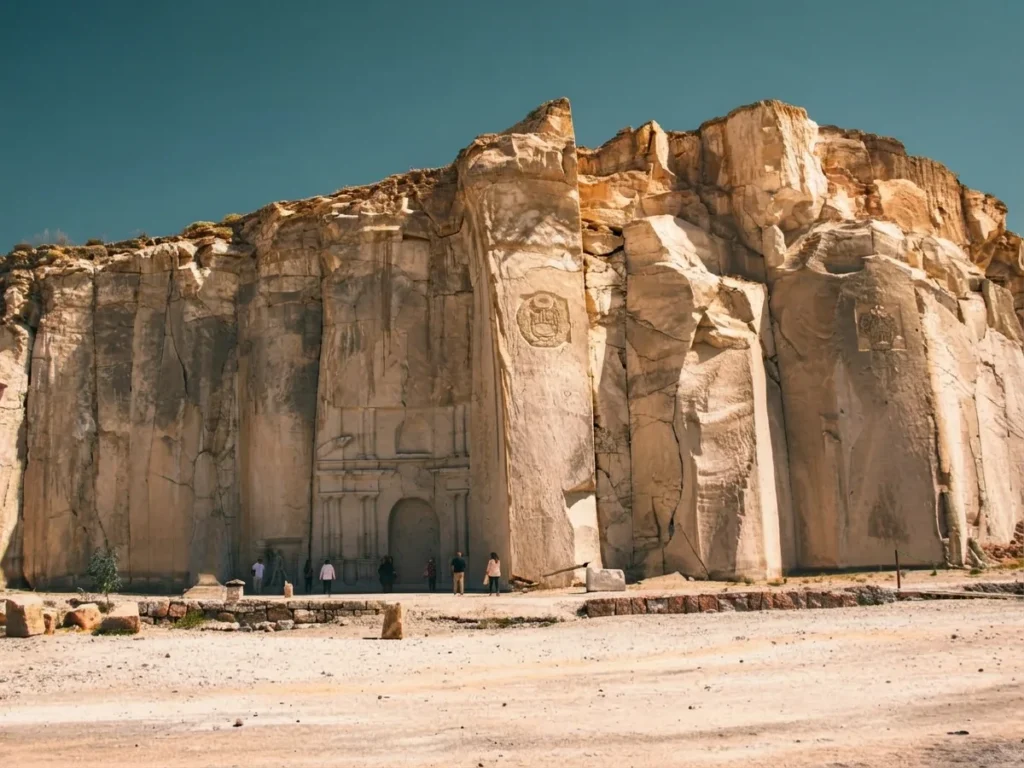
The Sillar: The White Volcanic Stone That Built the City
The Sillar, the white stone from which the city gets its nickname, was formed by the volcanoes that surround it: Chachani (6,075 m), Misti (5,822 m), and Pichu Pichu (5,664 m).
This material, extracted from quarries, is fundamental to the architecture of the white city, prized for its durability and ease of carving.
If you want to learn more about the sillar, you can join the Sillar Route tour, where you’ll be part of the adventure of visiting the main quarries, as well as learning about traditional working techniques and getting to know the city’s most important buildings made using this stone.
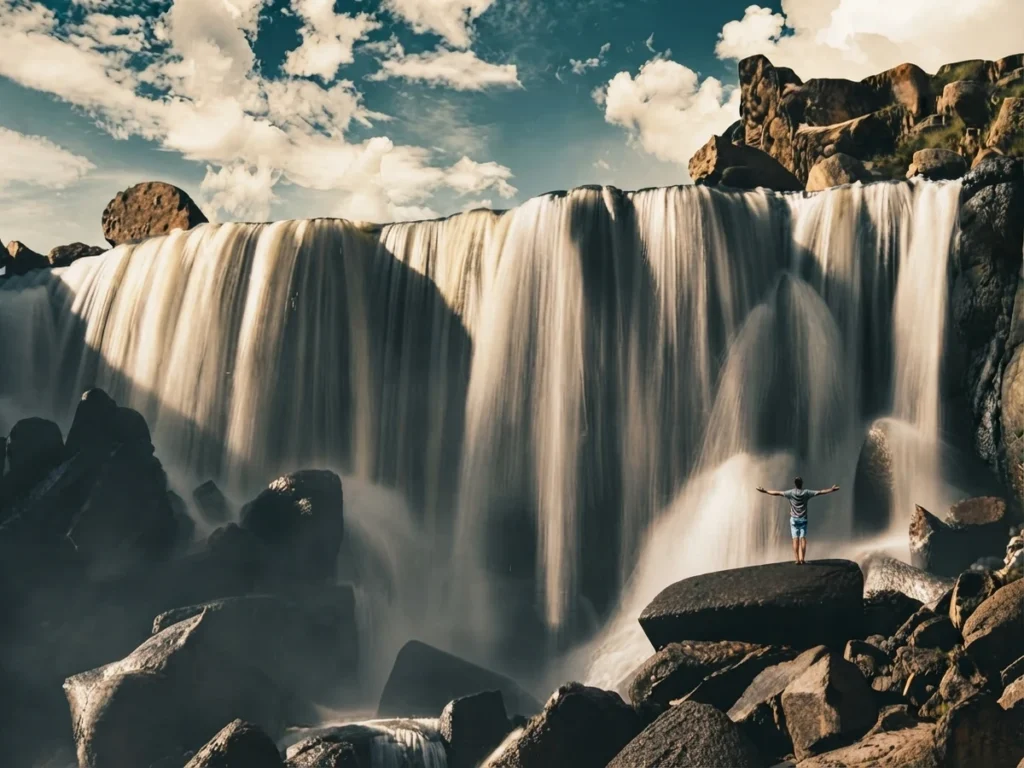
Pillones Waterfall: A Hidden Natural Wonder Near Arequipa
Tucked away in the high Andean puna at over 4,000 meters above sea level, the Pillones Waterfall (Catarata de Pillones) is one of Arequipa’s best-kept natural secrets. Surrounded by volcanic rock walls and unique wind-and-water-eroded stone formations, this hidden spot offers a peaceful, otherworldly landscape just a few hours from the city.
Most excursions combine the waterfall with a visit to the nearby Imata Stone Forest (Bosque de Piedras de Imata), where dramatic rock formations shaped by centuries of erosion resemble prehistoric animals and curious faces. The full-day tour typically departs Arequipa early in the morning, stops in the towns of Pampa de Arrieros and Patahuasi for breakfast and coca tea to help with altitude, then continues on foot for about an hour to reach the falls.
Recommendations for visiting Arequipa
- Best time to visit: The dry season, from April to December, is ideal for touring the city and its surroundings, as it has low humidity and little rainfall. During summer, from December to March, cloudiness and rain increase, especially in January and February.
- Local gastronomy: You can’t miss trying “queso helado” (ice cream cheese), a traditional Arequipa dessert that, despite its name, contains no cheese.
- Altitude acclimatization: Arequipa is located 2,335 meters above sea level. To prevent altitude sickness:
- Stay hydrated; water is essential to combat and prevent this condition.
- Avoid alcohol and tobacco, as they can dehydrate you and make breathing difficult.
- Eat a light but calorie-rich diet to compensate for the increased energy expenditure.
- Where to stay: Staying in the historic center is an excellent option, as it allows you to be close to the main attractions without needing long trips.
- Safety precautions: Arequipa is a relatively safe city, but it is advisable to take basic measures such as avoiding displaying valuables and not walking alone through areas far from the tourist circuit at night.
- Sun protection: Radiation in Arequipa is quite intense due to the altitude, so it is essential to apply high-protection sunscreen and wear glasses with UV filter to avoid damage to the skin and eyes.
- Climate and clothing: Although temperatures in Arequipa are relatively constant, the thermal sensation can vary due to the humidity and dryness of the air. It is advisable to dress in layers to adapt to temperature changes during the day and night.
- Documentation: Always carry with you a copy of your ID or passport and if you are a foreigner, check the visa and permitted stay requirements. It is essential to carry a valid passport with at least 6 months of validity.
- Money and payments: Bring dollars and exchange them at currency exchange offices near the Plaza de Armas for better rates. In Arequipa many businesses accept soles and dollars. Most accept credit and debit cards, but some charge an extra 5%, so it’s a good idea to carry some cash.
- Colca Canyon visit tip: If visiting the Colca Canyon, leave Arequipa as early as possible (around 4:00 AM) to reach the Cruz del Cóndor viewpoint before mid-morning, when condor sightings are most frequent.